



Upcoming Events

Recent Events

Scope of BHM in Nepal: Career Opportunities & Future Growth

The hospitality industry is growing rapidly around the world. Tourism, hotels, restaurants, and travel services are expanding every year. Because of this growth, many students are now exploring the scope of BHM in Nepal as a promising career path.

Nepal is a country famous for tourism, culture, and adventure travel. Every year, thousands of tourists visit places like Kathmandu, Pokhara, Chitwan, and Everest. As tourism grows, the demand for trained professionals with a Bachelor of Hotel Management in Nepal also continues to rise.

Choosing a career in hotel management can open doors to exciting jobs in hotels, airlines, restaurants, cruise ships, and tourism companies. This article explains the scope of BHM in Nepal, career opportunities, salaries, course structure, and future growth for students interested in hospitality.

What is BHM (Bachelor of Hotel Management)?

The Bachelor of Hotel Management in Nepal is a four-year undergraduate program that prepares students for careers in the hospitality and tourism industry. The course focuses on hotel operations, customer service, tourism knowledge, and business management skills.

The Bachelor’s in Hospitality Management in Nepal program teaches students how hotels and tourism businesses operate. Students can learn both theoretical and practical skills through training and internships.

The BHM course details in Nepal usually include classroom learning, kitchen practice, hotel operations training, and industrial internships. This combination helps students understand how different hotel departments work together.

Students completing the Bachelor of Hotel Management in Nepal can work in many industries, such as:

  • Hotels and resorts
  • Restaurants and cafes
  • Airlines and airports
  • Cruise ships
  • Event management companies
  • Tourism businesses


Because hospitality is a global industry, the scope of BHM in Nepa
l extends beyond Nepal’s borders, offering international career opportunities.

BHM Course Subjects in Nepal

Students Seeking a Bachelor of Hotel Management in Nepal study a range of subjects that help them manage hospitality businesses effectively. These subjects combine practical skills with management knowledge. Some important BHM subjects in Nepal include:

Core Practical Subjects

  • Food Production (Culinary Arts)
  • Food and Beverage Service
  • Housekeeping Operations
  • Front Office Management


Management and Business Subjects

  • Hospitality Marketing
  • Tourism Management
  • Hotel Accounting
  • Human Resource Management


Additional Learning Areas

  • Event Management
  • Hospitality Law
  • Customer Service Training


These BHM course subjects in Nepal help students build essential skills like:

  • Communication
  • Leadership
  • Customer service
  • Business management
  • Team coordination


Understanding these BHM subjects in Nepa
l is important because hospitality professionals must manage both guests and hotel operations effectively.

Growth of the Hospitality and Tourism Industry in Nepal

The tourism sector plays a important role in Nepal’s economy. The country attracts visitors who come for mountains, culture, wildlife, and spiritual experiences.

Popular tourist destinations include:

  • Kathmandu Valley
  • Pokhara
  • Chitwan National Park
  • Lumbini
  • Everest Region


With tourism increasing every year, the scope of BHM in Nepal is becoming wider. More hotels, resorts, and restaurants are opening across the country.

Major developments in hospitality include:

  • New luxury hotels and resorts
  • Growth of adventure tourism
  • Expansion of eco-tourism
  • Rise in international tourist arrivals


Because of these developments, graduates of bachelor’s programs
in hospitality management in Nepal are in high demand. Many international hotel chains are also entering Nepal. This creates more job opportunities for students completing a Bachelor of Hotel Management in Nepal.

Career Opportunities After BHM

The huge advantages of studying hospitality is the variety of jobs available. Students completing a Bachelor of Hotel Management in Nepal can work in many sectors of the service industry.

The scope of BHM in Nepal includes several career paths.

Hotel Management

Graduates can work in different hotel departments such as:

  • Front office
  • Housekeeping
  • Food and beverage service
  • Hotel operations

This is one of the most common options for students starting a career in hotel management.

Restaurant and Catering Business

Hospitality graduates can manage restaurants, cafes, and catering services. Many students later start their own food businesses after completing their bachelor’s in hospitality management in Nepal.

Airline and Aviation Industry

Airlines hire hospitality graduates for roles such as:

  • Cabin crew
  • Ground staff
  • Customer service officers


This makes aviation another exciting option for those interested in a career in hotel management.

Event Management

Event companies need trained professionals to organize:

  • Weddings
  • Corporate events
  • Conferences
  • Festivals


Hospitality graduates with event planning skills are valuable in this industry.

Travel and Tourism Companies

Tour operators and travel agencies often hire students with expertise in tourism and hospitality. Graduates with knowledge of the BHM course details in Nepal are well prepared for these roles.

Entrepreneurship

Some students use their knowledge to start businesses such as:

  • Restaurants
  • Cafes
  • Travel agencies
  • Boutique hotels

Entrepreneurship is another growing part of the scope of BHM in Nepal.

Internship and Practical Training

Practical training is a key part of the BHM course details in Nepal. Students must complete internships in hotels and hospitality companies.

Internships help students gain real experience in departments such as:

  • Front office operations
  • Food and beverage service
  • Kitchen and culinary operations
  • Housekeeping management


Many
hotel management colleges in Nepal partner with well-known hotels to provide industrial training.

Internships allow students to:

  • Understand real hotel work environments
  • Build professional skills
  • Develop industry connections


For many students, internships become the first step toward a long-term career in hotel management sector.

World Wide Opportunities for BHM Graduates

Hospitality is a global industry. Skilled professionals trained through Bachelor of Hotel Management programs in Nepal can work in many countries.

Common destinations for Nepali hospitality graduates include:

  • United Arab Emirates
  • Qatar
  • Australia
  • United Kingdom
  • Canada
  • Singapore
  • Maldives


The cruise ship industry also hires hospitality professionals from around the world. Because hospitality skills are universal, the scope of BHM in Nepa
l often leads to international careers with attractive salaries and travel opportunities.

BHM Salary in Nepal

One common question students ask is about the BHM salary in Nepal. The salary depends on experience, position, and organization. Typical BHM salary in Nepal ranges from:

Entry Level

  • NPR 20,000 to NPR 35,000 per month


Supervisor Level

  • NPR 40,000 to NPR 60,000 per month


Management Level

  • NPR 70,000 to NPR 150,000+ per month


Professionals who work abroad or on cruise ships frequently receive better pay in addition to advantages like lodging, food,
and travel.allowances. As experience grows, the BHM salary in Nepal also increases significantly.

Skills Needed for a Successful Career in Hotel Management

To succeed in the hospitality industry, students must develop both technical and personal skills. Important skills for a career in hotel management include:

Communication Skills:

Hospitality professionals interact with guests from different cultural perspectives.

Customer Service Skills:

Guest satisfaction is the primary objective of hospitality businesses.

Leadership Quality:

Managers must guide teams to ensure smooth and effective operations.

Problem Solving Skills:

Handling guest complaints quickly is an important responsibility.

Time Management:

Hotel environments are fast-paced and require multitasking.

Students studying a bachelor’s degree in hospitality management in Nepal gradually develop these skills through training and real work experience.

Hotel Management Admission and Colleges in Nepal

Students interested in hospitality must complete hotel management admission after finishing their +2 education. Many universities offer a Bachelor of Hotel Management in Nepal.

Some well-known hotel management colleges in Nepal include:

  • IIMS College
  • Nepal Academy of Tourism and Hotel Management (NATHM)
  • Tribhuvan University-affiliated colleges
  • Pokhara University-affiliated colleges
  • ISMT College
  • Other private hospitality institutes


When choosing among hotel management colleges in Nepal, students should consider:

  • Practical training facilities
  • Internship opportunities
  • Experienced teachers
  • Industry connections


A good college can help students build a successful
career in hotel management.

Cost of Studying BHM in Nepal

The cost of studying a Bachelor of Hotel Management in Nepal varies by college and university. Typical costs include:

Government Colleges

Around NPR 3–5 lakhs for the entire program.

Private Colleges

Around NPR 7–12 lakhs, depending on facilities and affiliation. Some hHotel management colleges in Nepal also provide scholarships for talented students.

Understanding the BHM course details in Nepal and the fee structure helps students plan their education better.

Future of the Hospitality Industry in Nepal

The future of the hospitality industry in Nepal looks very promising. Tourism continues to grow, and new hotels are opening across the country.

Key trends shaping the scope of BHM in Nepal include:

  • Growth of eco-tourism and sustainable tourism
  • Expansion of luxury hotels and resorts
  • Development of adventure tourism
  • Increase in international visitors
  • Digital technology in hotel management

These trends will create more opportunities for students completing a Bachelor’s in Hospitality Management in Nepal.

Conclusion

The scope of BHM in Nepal is growing rapidly because of the expansion of tourism and hospitality services. Students completing a Bachelor of Hotel Management in Nepal gain practical skills, industry knowledge, and international career opportunities. Graduates can build successful careers in hotels, airlines, cruise ships, restaurants, tourism companies, and event management businesses.

With the right education, training, and passion for service, students can build a strong career in hotel management both in Nepal and abroad. For students who enjoy meeting new people, learning about different cultures, and working in exciting environments, studying a bachelor’s degree in hospitality management in Nepal can be a great career choice.

Frequently Asked Questions

1. What industries hire (BHM) Hotel management graduates?

Graduates of the Bachelor of Hotel Management in Nepal can work in industries such as hotels, resorts, restaurants, airlines, cruise lines, tourism companies, and event management organizations. At IIMS College, students receive practical hospitality training that prepares them for professional roles across these growing global service industries.

2. How much does a fresh BHM graduate earn in Nepal?

Fresh BHM graduates in Nepal typically earn between NPR 15,000 and NPR 35,000 per month, depending on the organization and entry level position. According to IIMS College, with experience and promotions into supervisory or managerial roles, professionals can earn NPR 80,000 to NPR 150,000 or more in the hospitality sector.

3. How many years is the Bachelor of Hotel Management in Nepal?

The Bachelor of Hotel Management in Nepal is generally a four year undergraduate program that combines academic knowledge with practical training in hospitality operations. At IIMS College, the program also includes internships and industry exposure to help students gain real-world hospitality experience.

4. What is the future of hotel management in Nepal?

The future of hotel management in Nepal is very promising as the tourism and hospitality sectors continue to grow rapidly. IIMS College believes that the increasing number of hotels, resorts, and tourism businesses will create more career opportunities for skilled hospitality graduates.

5. Can BHM students work in airlines or on cruise ships?

Yes, BHM graduates can work in airlines as cabin crew, ground staff, or customer service professionals, as well as in international cruise ship hospitality departments. At IIMS College, students develop the service skills and industry knowledge needed to pursue global career opportunities in the aviation and cruise industries.

Top Computer Science Jobs in Nepal and Abroad After BCS

Technology is shaping almost every part of modern life. Many students choose a BCS degree to work in the tech industry. However, some students still feel unsure about their future. They often think about what kind of computer science jobs in Nepal they can get after finishing their studies. Many also wonder about career opportunities after BCS in computer science, and which industries are hiring.

The confusion grows because technology changes very fast. New tools, programming languages, and career paths appear every year. Without proper guidance, students may feel lost when thinking about jobs after computer science degree programs. They may not know which skills to learn or which path to follow.

The good news is that the tech industry offers many exciting careers. A BCS degree opens doors to many computer science jobs in Nepal and abroad. Graduates can work in software development, artificial intelligence, cybersecurity, and many other fields. This guide explains the top career opportunities after a BCS computer science degree, the skills required, and the most popular jobs today.

Why Computer Science Careers Are Growing Fast

The demand for technology experts is increasing every year. Today, almost every company uses digital systems. Businesses depend on software, websites, and data to run smoothly. Because of this, computer science jobs in Nepal are growing rapidly.

Many IT companies are expanding nationwide. Tech startups are also rising quickly. These businesses create new job opportunities for computer science graduates in many areas. Companies need developers, analysts, and engineers to build and manage digital systems.

Some reasons why computer science career options are growing include:

  • Increasing use of mobile apps and websites
  • Rapid growth of IT companies in Nepal
  • Global demand for skilled tech professionals
  • Rise of startups and digital businesses
  • More remote work opportunities

New technologies like artificial intelligence, cybersecurity, and cloud computing are also creating new jobs. Because of this, job opportunities for computer science graduates are stronger than ever. Students who complete a BCS degree can explore many exciting career options in computer science.

What Jobs Can You Do After a BCS Degree?

A BCS degree provides strong technical knowledge. It prepares students for many roles in the technology industry. Many students ask, what jobs can I do after BCS? The answer is simple. There are many BCS job opportunities in both Nepal and international markets.

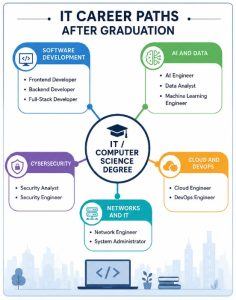
Graduates can explore several jobs after a computer science degree program, including:

  • Software development
  • Data science and analytics
  • Cybersecurity
  • Cloud computing
  • Network engineering
  • Artificial intelligence 

Each career path focuses on different skills and technologies. Some jobs involve building software, while others focus on protecting systems or analysing data. Because of this variety, BCS job opportunities allow students to choose careers based on their interests. In the following sections, we will explore the most popular IT courses after Plus Two and after a BSc degree, with a focus on completing a BCS degree.

Software Developer: One of the Most Popular Careers

What is the work of  Software Developer ?

Software developers create applications and digital systems. They design programs that help businesses operate smoothly. These professionals work on websites, mobile apps, and software tools used every day.

Because companies rely on digital systems, software developer jobs are among the most common career opportunities after a BCS in computer science.

Common Responsibilities

Software developers usually work on tasks such as:

  • Writing and testing program code
  • Building applications and websites
  • Fixing bugs and system errors
  • Improving software performance
  • Working with development teams 

Essntial Skills needed

To succeed in software developer jobs, there are many software engineering courses in Nepal. Students often learn programming languages like:

  • Python
  • Java
  • JavaScript 
  • C++ 

Developers are in demand across Nepal and globally. Many tech companies, startups, and international firms are hiring skilled developers. Because of this demand, software developer jobs remain one of the strongest career opportunities after a BCS in computer science.

Web Developer: Building Websites and Online Platforms

The Role of Web Developers

Web developers create websites and online platforms that people use every day. Businesses depend on websites to share information, sell products, and connect with customers. Because of this, the web developer career is one of the most exciting options in computer science.

Web developers usually work in two main areas:

  • Frontend development:  designing the visual parts of websites
  • Backend development:  managing server systems and databases 

Skills Required for Web Development

Students interested in a web developer career often learn skills such as:

  • HTML and CSS
  • JavaScript
  • Web frameworks
  • Database management

Another great advantage is freelancing. Many developers build websites for international clients. This makes the web developer career one of the most flexible options in computer science for a BCS graduation at IIMS College.

Data Scientist: Turning Data Into Smart Decisions

Understanding the Role

Data scientists analyse large amounts of data. They help companies understand trends and make better decisions. Because businesses depend on data today, the data scientist career is growing quickly.

Key Responsibilities

Professionals in the data scientist career often:

  • Collect and organise large datasets
  • Analyse patterns and trends
  • Build prediction models
  • Help companies make data-driven decisions 

Important Skills

Students interested in this field learn skills such as:

  • Python programming
  • Statistics and mathematics
  • Machine learning 
  • Data visualization tools 

Many industries need data experts. Banks, research organizations, and tech companies are hiring professionals in this field. Because of this demand, the data scientist career has become one of the top job opportunities for computer science graduates.

Cybersecurity Specialist: Protecting Digital Systems

Why Cybersecurity Matters

Cybersecurity professionals protect computer systems from digital threats. They ensure that company data remains safe. As cyber attacks increase worldwide, cybersecurity jobs are becoming more important.

Responsibilities of Cybersecurity Experts

Professionals working in cybersecurity jobs usually:

  • Monitor networks for security threats
  • Protect systems from hackers
  • Improve data security systems
  • Investigate security incidents 

Banks, government organizations, and IT companies all require cybersecurity experts. Because of this, cybersecurity jobs are increasing among computer science jobs in Nepal.

Cybersecurity has become one of the fastest-growing fields in technology. Many experts believe it will remain a key part of the future of computer science jobs in Nepal.

AI Engineer: Building Intelligent Technologies

What Is Artificial Intelligence?

Artificial Intelligence access machines to learn and perform tasks that normally require human intelligence. AI systems power voice assistants, recommendation systems, and smart robots. Because of this innovation, the AI engineer career is growing quickly.

Applications of AI

AI is used in many industries, including:

  • Healthcare
  • Finance
  • Robotics
  • Online services 

Students who want to build intelligent systems often pursue careers in AI engineering. This role is among the most exciting career options in computer science.

Skills for AI Engineers

To succeed in the AI engineer career, students usually learn:

  • Python programming
  • Machine learning algorithms
  • Data analysis
  • Neural networks 

AI is shaping the future of technology. As more industries adopt AI systems, the AI engineering career will remain one of the strongest options in computer science.

Cloud Computing Specialist: Managing Modern Digital Systems

Understanding Cloud Computing

Cloud computing allows companies to store data and run applications online rather than on physical servers. Because businesses depend on online services today, cloud computing jobs are growing quickly.

Responsibilities and roles of Cloud Engineers

Professionals working in cloud computing jobs often:

  • Manage cloud servers
  • Monitor system performance
  • Improve security and reliability
  • Support large-scale applications 

Popular Cloud Platforms

Cloud specialists often work with platforms like:

  • Amazon Web Services (AWS)
  • Google Cloud
  • Microsoft Azure 

Many global companies use cloud systems to run their services. Because of this demand, cloud computing jobs are among the most valuable BCS job opportunities today.

Database Administrator: Managing Important Data

What Does a Database Administrator Do?

Every organization stores large amounts of data. Database administrators manage and protect this information. Because businesses depend on data systems, database administrator jobs are essential.

Key Responsibilities

Professionals working in database administrator jobs often:

  • Organise company databases
  • Ensure system security
  • Improve database performance
  • Backup important information 

Skills Required

Students interested in database administrator jobs often learn:

  • SQL programming
  • Database design
  • Data management tools 

Banks, hospitals, and business companies rely on databases. Because of this, database administrator jobs remain important after computer science degree programs.

Network Engineer: Keep Systems Connected

Role of Network Engineers

Network engineers design and manage computer networks. These networks allow computers and systems to communicate with each other. Because modern businesses depend on connectivity, the network engineer career remains important.

Important  Responsibilities

Professionals in the network engineer career often:

  • Design network systems
  • Monitor internet connections
  • Solve connectivity issues
  • Improve network security 

Telecommunication companies, IT firms, and large organizations all require network experts. Because of this, the network engineering career is an important part of the computer science job landscape in Nepal.

Networking remains a critical technology field that supports digital infrastructure worldwide.

Job Opportunities Abroad After BCS

Technology skills are needed worldwide. Many countries are searching for skilled developers, engineers, and data experts. Because of this demand, there are many career opportunities in computer science after BCS outside Nepal.

Some countries with strong tech industries include:

  • United States
  • Canada
  • Australia
  • United Kingdom
  • Germany 

Many international companies also offer remote jobs. This allows graduates to work for global organizations while living in Nepal. Because of this trend, job opportunities for computer science graduates are expanding globally.

Students can also continue higher studies in computer science. Advanced degrees often open even more career opportunities after a BCS in computer science, in research and technology development.

Skills Needed to Build a Successful Computer Science Career

Technology careers require both technical and personal skills. Students who want strong career options in computer science should focus on developing these abilities early.

Important skills include:

  • Programming knowledge
  • Logical problem solving
  • Teamwork and communication
  • Continuous learning
  • Practical project experience 

These skills help students succeed in many jobs after completing computer science degree programs. Technology changes quickly, so professionals must keep learning new tools and systems. Students who build strong skills can explore many exciting computer science career options in the global tech industry.

Conclusion

A BCS degree opens the door to many exciting careers. Graduates can explore software development, cybersecurity, data science, networking, and many other fields. As technology advances, computer science jobs in Nepal continue to grow each year.

Many companies are looking for skilled professionals who can build, protect, and manage digital systems. These growing BCS job opportunities make computer science one of the most promising career paths today. Students can also explore global career opportunities after completing a BCS in computer science, as the demand for tech experts continues to expand worldwide. Students who focus on learning practical skills, building projects, and staying curious about technology can succeed in this field.

If you are interested in technology and innovation, start building your knowledge today. The future of computer science jobs in Nepal and around the world holds exciting possibilities. As you grow in experience and skills, the computer science salary also increases based on your role, expertise, and the technologies you work with.

Frequently Asked Questions

1. Is BCS a good career choice in Nepal?

Yes, BCS is a strong career choice in Nepal because the demand for skilled IT professionals continues to grow across many industries. With the rapid growth of technology companies and digital services, BCS graduates can explore many stable and rewarding career paths.

2. What is the future scope of BCS in Nepal?

The future scope of BCS in Nepal is very promising as businesses increasingly rely on technology, software, and data systems. This growth is creating more opportunities for graduates in areas like software development, cybersecurity, data science, and cloud computing.

3. What is the starting salary after BCS in Nepal?

The starting IT salary in Nepal usually ranges between NPR 40,000 and 150,000 per month, depending on a graduate’s skills, role, and experience. As professionals gain more experience and specialise in advanced technologies, their salaries and career opportunities can increase Gradually.

4. How can BCS students get jobs in the IT industry?

By developing their programming skills, working on real projects, and producing a portfolio of their work, BCS students can increase their prospects of landing IT jobs. Students can obtain real-world experience and industry connections by taking part in technology communities, coding contests, and internships.

5. Can BCS graduates work abroad?

Yes, BCS graduates can work abroad because computer science skills are in demand across the global technology industry. Many graduates pursue international careers or remote jobs with global companies after gaining the right experience and technical expertise.

Inside the BIHM Employability Workshop: Preparing Students for the Hospitality Industry

The hospitality industry is one of the most exciting career fields in the world. Hotels, airlines, restaurants, and resorts constantly look for talented people who can deliver excellent service. However, the industry is also highly competitive. Employers expect professionals who not only understand hospitality concepts but also have strong practical abilities. This is why programs and initiatives like the BIHM employability workshop are important for developing real-world skills. Many hospitality management students discover that classroom instruction alone is not enough to meet industry expectations, so practical learning opportunities are key to preparing them for successful careers.

Companies now look for people who can communicate clearly, work with teams, solve problems quickly, and handle real guest situations with confidence. These hospitality industry skills are essential in daily hotel operations. Without them, even talented students may struggle to succeed in a professional hospitality environment.

This is why the BIHM employability workshop is so important. The workshop helps hospitality management students gain practical knowledge and develop the right professional mindset. Through interactive activities, industry guidance, and hands-on learning, students improve their hospitality industry skills and understand what employers truly expect. By the end of the workshop, students are better prepared to step into real hospitality careers with confidence.

Why Employability Skills Matter in Hospitality

The hospitality industry focuses on people. Guests expect friendly service, clear communication, and a smooth experience. Because of this, employability skills in hospitality play a major role in professional success.

Hospitality professionals meet guests from different countries and cultures every day. They must solve problems quickly and maintain a positive attitude even during complicated situations. These responsibilities require strong skills in the hospitality industry that go beyond textbooks.

Communication Skills in Hospitality

Clear communication is one of the most important employability skills in hospitality.

Hospitality professionals need to:

  • Speak clearly with guests and colleagues
  • Listen carefully to customer needs
  • Provide helpful information politely
  • Handle complaints in a calm and professional way

Strong communication skills in hospitality help staff build trust with guests and create memorable experiences.

Teamwork in the Hospitality Industry

Hotels and restaurants work like large teams. Each department must cooperate to provide smooth service.

Important aspects of teamwork in the hospitality industry include:

  • Coordination between the front office, kitchen, and housekeeping
  • Helping colleagues during busy hours
  • Sharing responsibilities to complete tasks efficiently

Good teamwork in the hospitality industry improves service quality and ensures guests enjoy their stay.

Leadership in Hospitality Management

Leadership is another valuable skill for future managers. Strong leadership in hospitality management helps professionals guide their teams and make quick decisions.

Leaders in hospitality:

  • Support team members during operations
  • Solve service problems efficiently
  • Maintain high service standards

Developing leadership in hospitality management builds students’ confidence and prepares them for future management roles. Overall, strong employability skills in hospitality help students stand out during interviews and succeed in global hospitality careers.

Highlights of the BIHM Employability Workshop

The (Bachelor of International Hospitality Management) BIHM employability workshop provides a practical learning experience for hospitality management students. The workshop focuses on developing real-world abilities that employers value in the hospitality industry.

During the workshop, students participated in sessions that focused on career preparation and skill development. These sessions helped students understand what the industry expects from future hospitality professionals.

Career Preparation Sessions

Students received guidance on preparing for careers in hospitality.

The sessions included:

  • Understanding job roles in the hospitality industry
  • Learning how to present themselves professionally
  • Preparing for hospitality job interviews

These discussions helped hospitality management students gain a clearer view of career opportunities.

Professional Skills Development

Another key part of the BIHM employability workshop focused on improving important hospitality industry skills.

Students practiced skills such as:

  • professional communication
  • problem solving
  • customer service behavior

These activities helped students build confidence as they interacted with others.

Understanding Industry Expectations

The workshop also introduced students to real hospitality standards.

Students learned about:

  • service quality expectations
  • workplace discipline
  • professional attitudes

By connecting classroom knowledge with real experiences, the BIHM employability workshop helped students develop stronger hospitality industry skills needed for their careers.

What Students Learned from the Workshop

The BIHM employability workshop helped students gain valuable insights about the skills needed for the hospitality industry. The workshop focused on practical abilities that help students grow professionally.

Interview Confidence

Students learned how to present themselves confidently during interviews.

They practiced:

  • introducing themselves professionally
  • explaining their hospitality interests
  • answering interview questions clearly

These activities improved hospitality communication skills, which are essential in job interviews.

Workplace Etiquette

Professional behavior is very important in the hospitality industry. Students learned about workplace etiquette and grooming standards.

Important topics included:

  • professional dress codes
  • respectful communication
  • punctuality and discipline

Understanding these habits helps students meet real hospitality workplace expectations.

Teamwork and Leadership

Group activities allowed students to practice teamwork in the hospitality industry.

Students worked together to:

  • solve service challenges
  • share responsibilities
  • support team members

These activities also helped develop leadership in hospitality management, especially when students guided group discussions or coordinated tasks.

Industry Expectations

Students also learned about the skills needed for the hospitality industry.

These included:

  • customer service excellence
  • communication skills
  • teamwork and leadership abilities

The workshop showed students how these skills support successful careers in hospitality.

How BIHM Prepares Students for Real Careers

The BIHM program focuses on preparing students for real hospitality careers. Beyond workshops, the program offers many opportunities to build strong hospitality industry skills.

Internships

Internships allow students to gain real experience in hotels and hospitality businesses.

During internships, students:

  • observe daily hotel operations
  • interact with guests and staff
  • Practice professional responsibilities

This hands-on experience helps students understand the reality of a hospitality management career.

Practical Training

Additionally, BIHM emphasizes hands-on learning.

Students take part in: 

  • virtual hospitality activities
  • Practice sessions for services
  • actual situations in the hotel industry

These experiences strengthen hospitality industry skills and prepare students for future jobs.

Industry Projects

Students also work on projects related to real hospitality challenges.

Projects may include:

  • service improvement plans
  • hospitality event planning
  • customer experience strategies

Such activities help students think creatively and prepare for a successful hospitality management career.

Why Industry Exposure Makes BIHM Different

Industry exposure plays a major role in hospitality education. BIHM focuses on providing learning opportunities that connect students with real professionals.

These experiences help hospitality management students understand how the industry works in real life.

Workshops

Regular workshops allow students to learn directly from industry professionals.

These sessions focus on:

  • developing professional skills
  • understanding industry trends
  • improving hospitality knowledge

Workshops like the BIHM employability workshop support continuous learning.

Industry Mentors

Industry mentors provide valuable guidance to students.

Mentors share their professional experiences and explain how hospitality operations function. This guidance helps hospitality management students build confidence and develop leadership in hospitality management.

Guest Lectures

Guest lectures are another important part of industry exposure.

Hospitality professionals discuss:

  • current hospitality trends
  • career challenges and opportunities
  • real workplace expectations

These experiences allow students to connect their academic knowledge with real industry practices.

Such exposure strengthens students’ skills in the hospitality industry and prepares them for professional environments.

Conclusion

The BIHM employability workshop is more than just a training event. It helps students develop important professional skills and understand the industry’s real expectations.

Through practical activities, professional guidance, and industry interaction, hospitality management students gain valuable experience that supports their future careers. The workshop also strengthens essential hospitality industry skills, including communication, teamwork, and leadership.

The goal of programs like BIHM is to prepare students for both academic and professional success. Students are better equipped for a prosperous career in hospitality management through internships, workshops, and actual industry exposure.

With the right skills, confidence, and industry knowledge, BIHM students can step into the global hospitality industry and build meaningful careers in hotels, resorts, airlines, and many other exciting hospitality sectors.

Frequently Asked Questions

1. What is BIHM, and how is it different from a regular hotel management degree?

BIHM (Bachelor of International Hospitality Management) is a degree that focuses on global hospitality practices, industry exposure, and employability skills beyond traditional hotel studies. Unlike a regular hotel management degree, BIHM emphasizes international standards, professional development, and real‑world industry readiness.

2. What are the career opportunities after completing BIHM?

After completing BIHM, students can work in hotels, resorts, airlines, event management, cruise ships, and tourism operations worldwide. Graduates can pursue roles in front office management, food and beverage supervision, guest relations, sales, and hospitality leadership.

3. What is the salary of BIHM in Nepal?

The salary after BHM in Nepal varies by position and company, but fresh graduates often start with competitive entry‑level packages. As an example, a hotel manager in Nepal can earn around Rs. 43,500 per month, with higher pay as experience grows.

4. Is BIHM a good degree?

Yes, BIHM is a good degree for students who enjoy working with people, hospitality, and travel, and who want a career that can take them around the world. It equips students with practical skills, industry experience, and professional confidence to succeed in many service‑oriented fields.

5. What are the courses comes under hospitality management?

The hospitality management program at IIMS College includes key courses such as Business Law, Room Operations, Hospitality Concept Development, and Customer Service Management. Students also gain hands-on experience through Hospitality Internship and learn practical skills in Sales and Promotion to prepare for real-world careers.

Top BHM Colleges in Nepal: Fees, Admission, and Career Opportunities

Many students in Nepal dream of working in hotels, resorts, or the tourism industry. However, they often feel confused about choosing the right hotel management course in Nepal. Students also want to know about the top BHM colleges in Nepal, the BHM course fees in Nepal, and the scope of BHM in Nepal before making a decision.

Some students search for a hotel management course in Nepal after 12th, while others look for a hotel management course in Nepal after SEE or even a hotel management course in Nepal after 10th. Because of this confusion, students need clear and simple guidance.

Without proper information, students may choose the wrong college or course. They may also not understand the BHM course duration in Nepal, the BHM course subjects in Nepal, or the real BHM course details in Nepal.

This guide will explain everything about Top BHM colleges in Nepal, including BHM course fees in Nepal, admission process, BHM subjects in Nepal, and the scope of BHM in Nepal.

What is the BHM Course in Nepal?

The BHM course in Nepal stands for Bachelor of Hotel Management. It is one of the most popular programs for students interested in the hospitality industry.

This hotel management course in Nepal teaches students how hotels, restaurants, and tourism businesses work.

Important Points about BHM

  • The BHM course in Nepal usually lasts 4 years.
  • It includes both theoretical classes and practical training.
  • Students learn hospitality skills, customer service, and hotel operations.

Students usually join the BHM course in Nepal after 12th grade. However, some students first explore a hotel management course in Nepal after SEE or a hotel management course in Nepal after 10th before entering a bachelor’s program.

The BHM course details in Nepal focus on many hospitality areas, such as:

  • Hotel operations
  • Food and beverage service
  • Tourism management
  • Event management

Because tourism is growing in Nepal, the scope of BHM in Nepal continues to increase.

BHM Course Duration in Nepal

The BHM course in Nepal typically lasts 4 years. This course is divided into 8 semesters. Each semester, the BHM course covers different subjects in Nepal and hospitality skills.

Course Structure

  • 4 academic years
  • 8 semesters
  • Internship training in hotels

During this period, students learn both theory and practice. The BHM course in Nepal after 12th is designed to prepare students for real hotel jobs. The course also includes internships that help students gain hands-on experience in the hospitality industry.

Because the BHM course duration in Nepal includes practical training, graduates become ready for jobs quickly. This is one reason why many students choose Top BHM colleges in Nepal.

BHM Subjects in Nepal

The BHM subjects in Nepal focus on hotel operations, food service, tourism, and management. These BHM course subjects in Nepal help students learn practical hospitality skills.

Common BHM Course Subjects in Nepal

Some important BHM course subjects in Nepal include:

  • Food Production
  • Food and Beverage Service
  • Front Office Management
  • Housekeeping Management
  • Hospitality Marketing
  • Tourism Management
  • Event Management
  • Business Communication

These BHM subjects in Nepal prepare students for careers in hotels, restaurants, airlines, and cruise ships. The BHM course details in Nepal also include practical training in hotel kitchens and service areas.

Students studying at Top BHM colleges in Nepal have access to modern labs and training facilities. These facilities help them practice real hospitality tasks. Learning these BHM course subjects in Nepal improves communication skills, teamwork, and leadership. Because of these skills, the scope of BHM in Nepal becomes wider every year.

BHM Course Fees in Nepal

The BHM course fees in Nepal vary by institution. On average, the BHM course fees in Nepal range between NPR 5 lakh and NPR 8 lakh for the full program.

Factors That Affect BHM Course Fees

The BHM course fees in Nepal may vary depending on:

  • College reputation
  • Training facilities
  • Internship opportunities
  • International partnerships

Students studying at Top BHM colleges in Nepal, such as IIMS College, often pay higher fees because these colleges offer better training and job opportunities.

However, many colleges also offer:

  • Scholarships
  • Installment payment options
  • Financial support programs

Before applying, students should always check the BHM course details in Nepal and the exact BHM course fees in Nepal. Understanding the fees helps students plan their education properly.

Hotel Management Course in Nepal After SEE or 10th 

Some students become interested in hospitality early on. Because of this, they search for a hotel management course in Nepal after SEE or a hotel management course in Nepal after 10th. These courses are usually diploma or certificate programs.

Diploma Hospitality Courses

A hotel management course in Nepal after SEE may include:

  • Basic cooking training
  • Hospitality service skills
  • Hotel housekeeping
  • Tourism basics

These programs help students understand the hospitality industry. Later, they can join a BHM course in Nepal after 12th for advanced education.

Many students first complete a hotel management course in Nepal after 10th grade and then continue with higher studies. This pathway helps them build strong hospitality skills step by step.

Top BHM Colleges in Nepal

Several colleges in Nepal provide high-quality hospitality education. These institutions are known as the Top BHM colleges in Nepal. Students choose these colleges for their practical training and strong industry connections.

Examples of Top BHM Colleges in Nepal

Some well-known Top BHM colleges in Nepal include:

  • IIMS College Kathmandu
  • NATHM
  • Nepal Academy of Tourism and Hotel Management
  • Silver Mountain School of Hotel Management
  • International School of Tourism and Hotel Management

These Top BHM colleges in Nepal offer modern training facilities and experienced teachers. Students at these colleges learn real-world hotel operations. Many of these institutions also provide international internships. Because of these opportunities, the scope of BHM in Nepal continues to grow. Choosing one of the Top BHM colleges in Nepal helps students build a successful career in hospitality.

Scope of BHM in Nepal

The scope of BHM in Nepal is growing quickly. The tourism and hospitality industries are expanding every year. As a result, graduates of Top BHM colleges in Nepal can find many job opportunities.

Career Opportunities After BHM

Students who complete the BHM course in Nepal after 12th can work in:

  • Hotels and resorts
  • Airlines and cruise ships
  • Restaurants and cafes
  • Event management companies
  • Tourism companies

The scope of BHM in Nepal is not limited to Nepal.

Graduates can also work internationally in countries like:

  • Dubai
  • Australia
  • Canada
  • Malaysia

The hospitality industry values trained professionals. This is why the hotel management course in Nepal is becoming more popular among students.

Conclusion 

Choosing the right hospitality program is an important decision for students. The Top BHM colleges in Nepal provide strong education, practical training, and global career opportunities.

Before applying, students should understand the BHM course details in Nepal, including the BHM course duration in Nepal, BHM subjects in Nepal, and the BHM course fees in Nepal.

Students can start their journey through a hotel management course in Nepal after SEE or a hotel management course in Nepal after 10th, and later continue with the BHM course in Nepal after 12th. Follow us on social media channels such as Facebook, Instagram, Linkedin, TikTok, and YouTube for the latest updates.

As tourism grows, the scope of BHM in Nepal will continue to expand. For students who enjoy hospitality and customer service, studying in one of the Top BHM colleges in Nepal can open many exciting career opportunities.

Frequently Asked Questions 

1. What are the skills required for BHM students?

At IIMS College, students are encouraged to develop strong communication, teamwork, and customer service skills to succeed in the hospitality industry. Basic problem-solving ability, time management, and a positive attitude also help students perform well in hotel and tourism environments.

2. Is BHM a good course for the future?

According to IIMS College, BHM is a strong career choice in Hotel Management in Nepal because the hospitality and tourism industries continue to grow worldwide. The course opens opportunities in hotels, airlines, resorts, and international tourism businesses.

3. What are the eligibility requirements for BHM in Nepal?

As explained by IIMS College, students usually need to complete their +2 or equivalent education from a recognized board to apply for a BHM program. Some colleges may also require entrance exams or interviews as part of the admissions process.

4. Is the hospitality industry growing in Nepal?

Yes, the hospitality sector in Nepal is expanding due to rising tourism, new hotel openings, and international travel opportunities. Experts at IIMS College believe this growth is creating more career paths for hospitality graduates.

5. What is the starting salary of BHM graduates?

Hospitality graduates can begin with entry-level positions in hotels, restaurants, or tourism companies. According to IIMS College, the starting salary usually depends on the job role, skills, and experience, but it improves quickly with industry exposure.

Study at IIMS College in Kathmandu, Nepal (2026 Guide)

Overview of IIMS College Kathmandu (2026)

IIMS College Kathmandu is an international college in Nepal affiliated with Taylor’s University, Malaysia. Located at Naxal Bhagwatibahal, opposite Hilton Hotel, Kathmandu, it offers globally recognized programs in IT, Business, Hospitality..

Key Highlights:

  • Internationally affiliated degrees without leaving Nepal
  • Career-oriented, internship-based education
  • Modern campus with innovation & entrepreneurship hubs
  • Global exposure through partner universities in Malaysia, Australia & the UK

Programs Offered at IIMS College (2026)

IIMS College offers undergraduate honors degrees designed to meet global standards, integrate practical learning, and prepare students for successful careers.

Program Duration Affiliation Career Paths
Bachelor of Computer Science (Hons) 4 Years Taylor’s University, Malaysia Software Developer, IT Consultant, Data Scientist, Cybersecurity Expert, Mobile App Developer
Bachelor of Business (Hons) 4 Years Taylor’s University, Malaysia Business Analyst, Marketing Executive, Finance Officer, Entrepreneur, Management Consultant
Bachelor of International Hospitality Management (Hons) 4 Years University of Toulouse Jean-Jaurès (France) Hotel/Resort Manager, F&B Supervisor, Event/Tourism Manager, Hospitality Consultant

Bachelor of Computer Science (Hons)

Program Highlights:

  • Core Subjects: Algorithms, Programming, Data Structures, Software Engineering, Networks
  • Advanced Modules: Artificial Intelligence, Data Science, Cybersecurity, Mobile Computing, IoT
  • Flexible Career Tracks: Internship, Work-Based Learning, Technopreneurship
  • Globally recognized degree aligned with Taylor’s University

Career Opportunities:

  • Software Developer | IT Consultant | Data Scientist | Cybersecurity Expert | Mobile App Developer

Learn more: BCS Program Details

Bachelor of Business (Hons)

Program Highlights:

  • Ranked Subjects aligned with Taylor’s University (Top 150 globally for Business & Management Studies)
  • Flexible Specializations: Finance, Marketing, Digital Marketing & Analytics, Global Business & Sustainability, Digital Business & Transformation
  • Practical Exposure: Projects, internships, industry immersion
  • Overseas Transfer Options: Australia & UK

Career Opportunities:

  • Business Analyst | Marketing Executive | Finance Officer | Entrepreneur | Management Consultant

Learn more: Business Program Details

Bachelor of International Hospitality Management (Hons)

Program Highlights:

  • Core Hospitality Skills: Accommodation, F&B Operations, Restaurant & Hotel Revenue Management, Service Quality
  • Management & Leadership: Business Modeling, Project Management, Entrepreneurial Skills
  • Practical Exposure: Work-Based Learning (WBL), Industry Projects, One-Year Internship
  • International Recognition: License from University of Toulouse, France

Career Opportunities:

  • Hotel/Resort Manager | F&B Supervisor | Event/Tourism Manager | Hospitality Consultant | Entrepreneur

Learn more: Hospitality Program Details

IIMS College Admission 2026 – Complete Guide


Undergraduate Programs Admission


Eligibility:

  • Completion of +2 or equivalent from recognized board
  • Minimum academic requirement based on program

Required Documents:

  • Grade 10 & 12 academic transcripts
  • Citizenship certificate or passport
  • 2–3 passport-size photographs
  • Completed application form
  • English proficiency certificate (if required)

Admission Process:

  • Submit Application (online or at college)
  • Academic Evaluation
  • Interview/Assessment (if required)
  • Final Enrollment – May 2026 intake

Student Life & Internships at IIMS College Kathmandu


Campus Environment & Learning Culture:

  • Smart Classrooms & Digital Labs
  • Innovation & Entrepreneurship Hubs
  • Experiential Facilities (Hospitality Training, Collaborative Zones)
  • Community Spaces for discussions, events, and teamwork

Dynamic Campus Life:

  • Student Clubs & Societies: IT Club, Hospitality Hub, BizHub, Media Club, Sports & Well-being
  • Workshops, Seminars, Industry Visits
  • Cultural Festivals, Competitions, Community Events

Growth & Development Services (GDS):

  • Soft Skills, Career Readiness, CV & Interview Preparation
  • Student Initiatives & Events
  • Business Incubation (BizHub)

Internships & Professional Exposure:

  • Industry Placements in IT, Business, Hospitality, Management
  • Mandatory Work-Based Learning & Immersion Modules
  • Professional Networking Opportunities

Why Choose IIMS College Kathmandu?

  • International Degree without Studying Abroad
  • Affiliation with Taylor’s University, Malaysia
  • Industry-Integrated Learning
  • Modern Campus Infrastructure
  • Career-Focused Education Model

Quick Summary – IIMS College 2026

Attribute Details
Location Kathmandu, Nepal
Affiliation Taylor’s University, Malaysia
Programs IT, Business, Hospitality
Degree Type International Honors Degree
Focus Internship-based, Career-Oriented

Frequently Asked Questions


Is IIMS College affiliated with an international university?

Yes. IIMS College Kathmandu is affiliated with Taylor’s University, Malaysia, allowing students to earn internationally recognized degrees while studying in Nepal.

Which programs does IIMS College offer in 2026?

IIMS College offers:

  • BSc Computer Science (Hons) – IT, AI, Data Science, Cybersecurity
  • BBA (Hons) – Business, Finance, Marketing, Management
  • BSc International Hospitality Management (Hons) – Hospitality, Tourism, F&B

Where is IIMS College located in Kathmandu?

The campus is at Naxal Bhagwatibahal, opposite Hilton Hotel, Kathmandu, Nepal, featuring modern classrooms, labs, innovation hubs, and collaborative learning spaces.

How can I apply for admission to IIMS College in 2026?

Submit your academic transcripts and completed application form, attend interview or assessment if required, and confirm enrollment after receiving the admission offer. Start dates depend on the program.

Does IIMS College provide internships and practical training?

Yes. All programs include internships or work-based learning to give students hands-on experience and prepare them for local and global careers.

Why choose IIMS College for higher education in Kathmandu?

IIMS College offers internationally recognized degrees, modern infrastructure, industry-integrated learning, and global exposure, helping students build skills for careers in IT, business, hospitality, and management.

Study and Work Together After +2 in Nepal: Is It the Right Choice for Students?

After completing +2, many Nepali students face an important decision: should the focus be only on studies, or is it better to study and work at the same time?

With rising education costs, increasing competition, and early career pressure, studying and working together after +2 has become a popular option in Nepal. But is this path suitable for everyone?

This blog explains what studying and working side by side really means, its benefits, challenges, legal aspects in Nepal, and how to decide whether it is the right choice.

What Does Studying and Working Together After +2 Mean?

Studying and working together after +2 usually refers to:

  • Enrolling in a college or university program
  • Doing part-time jobs, internships, or flexible work alongside studies
  • Managing both academic responsibilities and work schedules simultaneously

In Nepal, this commonly includes:

  • Working in hospitality, retail, offices, IT support, or internships
  • Choosing courses with flexible class timings
  • Gaining real-world experience while continuing formal education

This approach is different from full-time employment and is mostly focused on earning experience and supporting expenses, not replacing education.

Why Many Nepali Students Choose to Work While Studying

Many students in Nepal choose to work after +2 for practical and personal reasons:

  • To support education expenses
  • To reduce financial pressure on family
  • To gain early work experience
  • To become independent and confident
  • To understand career interests before long-term commitment

For students from middle-income families, studying and working together often feels like a necessary and responsible decision, not just a choice.

Advantages of Studying and Working Side by Side After +2

When managed well, this path offers several benefits:

  • Earn while studying to manage personal and academic expenses
  • Gain practical skills alongside theoretical knowledge
  • Improve communication, teamwork, and time management
  • Build confidence and professional discipline early
  • Get clarity about career goals before graduation

Employers increasingly value experience, and students who work early often develop better workplace readiness.

Challenges Students Should Know Before Choosing This Path

Studying and working together is not easy. Students should be aware of the challenges:

  • Time management pressure between classes, assignments, and work
  • Risk of academic performance dropping
  • Physical and mental fatigue
  • Limited social or personal time
  • Poor job choices that do not add learning value

Ignoring these challenges can lead to burnout or incomplete education, which is why careful planning is essential.

Is It Legal to Work While Studying After +2 in Nepal?

Yes, working while studying after +2 is legal in Nepal.

There are:

  • No strict laws preventing students from part-time work
  • No specific student work-hour limits like foreign countries

However, students should:

  • Avoid unsafe or exploitative jobs
  • Choose ethical and skill-based work
  • Ensure work does not interfere with academic commitments

Parental guidance and institutional support play an important role here.

Best Courses After +2 for Students Who Want to Work

Not all courses are suitable for working students. Some programs naturally offer more flexibility and practical exposure.

Courses that work well with part-time jobs:

  • IT and Computer Science – flexible schedules, internships, freelance options
  • Business and Management – office jobs, internships, practical projects
  • Hospitality Management – industry exposure, shift-based work
  • International degree programs with structured academic planning

These courses focus on skill development, making work experience a valuable extension of classroom learning.

A Realistic Note: This Is Not for Every Student in Nepal

It is important to be clear about one thing.

This blog is NOT talking about students who must spend their entire day on studies, such as:

  • Students preparing for highly competitive entrance exams
  • Students in programs with heavy daily classes and lab hours
  • Students who already struggle academically and need full focus
  • Students with health, mental pressure, or family constraints

In Nepal, many students already have:

  • Long commuting hours
  • Packed class schedules
  • Academic pressure from family expectations

For such students, trying to work alongside studies can do more harm than good.

Who Should Choose Study and Work Together After +2?

This path is suitable for students who:

  • Are disciplined and self-motivated
  • Can manage time effectively
  • Have clear academic priorities
  • Want early career exposure
  • Are financially responsible

For such students, working while studying can be a smart long-term investment.

Conclusion: Is Studying and Working Together After +2 Right for You?

There is no one-size-fits-all answer.

Studying and working together after +2 in Nepal can be a great opportunity if:

  • The course is flexible
  • The work is meaningful
  • The student maintains academic focus

However, without proper planning and discipline, it can also become overwhelming. The right decision depends on personal goals, financial situation, course structure, and mindset.

Taking guidance from academic counselors and choosing the right institution and program can make this journey smoother and more rewarding.

Frequently Asked Questions (FAQs)

1. Can I work while studying after +2 in Nepal?

Yes – many students in Nepal do part-time work or internships while studying after +2. This can include jobs in cafes, retail stores, hospitality, or internships related to your field of study. However, not all students have enough free time to do so, especially those with heavy class schedules or long commute times.

2. What kinds of jobs can +2 students do while studying?

After +2, common part-time jobs in Nepal include:

  • Retail sales assistant
  • Waiter / barista
  • Customer service representative
  • Office support roles
  • Internships (field-specific)

Some students also try online work such as freelance projects.

3. Do part-time jobs help my studies?

Yes, if the work is related to what you study, it can reinforce learning and improve understanding. Students working in jobs related to their field often find they can apply classroom theory to real situations, which improves both academic performance and practical skills.

4. How much can a student earn while working in Nepal?

Earnings vary widely depending on the job. Some students reported working long days in hospitality or retail and earning modest monthly income, though this may not be enough to cover all expenses.

5. Will working affect my academic performance?

It can. Managing both work and studies is a challenge. If you take on too many hours or choose a demanding job, academic performance may drop, and fatigue can build up. Planning and time management are very important.

6. Is there a good environment for students to earn while studying in Nepal?

The environment for studying and earning in Nepal is still developing. Many students mention that steady, well-paid student jobs are not easy to find and that work opportunities are limited compared to some other countries.

7. Can I find work related to my future career while studying?

Yes – internships or field-related work help you build a resume. Internships in IT, business, or marketing fields are sometimes offered by companies and can give both income and experience.

8. Should every student try to study and work together?

No. Students with heavy academic schedules, competitive exam preparation, or health and family responsibilities may find it stressful and harmful to their studies. It works best for those who can manage their time, have flexible classes, and prioritize their goals.

The 10 Most In-Demand IT Careers for Nepali Students in 2026

Choosing the right career after +2 can feel confusing – especially when technology is changing so fast. New fields like Artificial Intelligence, Cybersecurity, and Data Science are growing rapidly, and students who prepare early can build strong, future-proof careers.

For Nepali students interested in Information Technology (IT), the coming years offer exciting opportunities – not only in Nepal but also in the global job market.

This guide explains the 10 most in-demand IT careers for 2026, in simple terms, and shows how students can start preparing right from college.

Why IT Is a Smart Career Choice for Nepali Students

Technology is now part of every industry – education, healthcare, banking, tourism, business, and government services. As companies continue to digitalise, the demand for skilled IT professionals keeps growing.

For Nepali students, IT offers:

  • High-demand career options
  • Opportunities to work globally
  • Strong salary potential over time
  • Flexible career paths (technical & creative)
  • Scope for freelancing and remote work

Starting IT education early – right after +2 – gives students a huge advantage.

Top 10 IT Careers That Will Be in Demand in 2026

Technology is evolving faster than ever, and the IT careers that will be most valuable in 2026 are already taking shape today. For students completing +2 and planning their future, understanding these roles early helps in choosing the right subjects, skills, and degree programs.

Below are the top 10 IT careers that are expected to remain in high demand globally and are also highly relevant for Nepali students.

1. Artificial Intelligence (AI) & Machine Learning Engineer

Artificial Intelligence (AI) and Machine Learning (ML) engineers work on systems that can learn from data and make decisions without being manually programmed. Examples include chatbots, voice assistants, recommendation systems (like YouTube or Netflix), and smart applications used in banking and healthcare.

These professionals design algorithms that allow machines to recognise patterns, predict outcomes, and improve over time. As AI becomes part of daily life – from mobile apps to business software – the need for skilled AI engineers continues to grow.

Why it’s in demand:

AI is now used in almost every industry, including education, finance, healthcare, e-commerce, and government services. Businesses rely on AI to automate tasks, reduce errors, and improve decision-making.

Good for students who enjoy:

  • Mathematics and logical thinking
  • Problem-solving
  • Coding and algorithms
  • Understanding how systems work

2. Data Analyst & Data Scientist

Data analysts and data scientists work with data to find useful insights. They analyse numbers, trends, and patterns to help organisations make better decisions. For example, they might analyse student performance data, business sales data, or customer behaviour.

While data analysts focus more on analysing existing data and creating reports, data scientists work on advanced models that predict future outcomes.

Why it’s in demand:

Every organisation today depends on data. Schools, hospitals, banks, businesses, and even government offices use data to improve efficiency and plan for the future.

Skills students can gradually learn:

  • Excel and spreadsheets
  • SQL for databases
  • Python for data analysis
  • Data visualisation tools

This career is ideal for students who enjoy working with numbers and finding meaning behind data.

3. Cybersecurity Specialist

Cybersecurity specialists protect computers, networks, and systems from cyber attacks. Their job is to keep data safe from hackers, malware, and online threats. This includes protecting websites, mobile apps, company databases, and even national digital systems.

They identify system weaknesses, monitor threats, and create security measures to prevent data loss.

Why it’s in demand:

As more services move online, cyber threats are increasing rapidly. From banks to colleges, every organisation needs cybersecurity professionals to protect sensitive information.

Good for students who like:

  • Ethical hacking
  • Understanding computer systems
  • Security and risk management
  • Critical and analytical thinking

Cybersecurity is also known for strong job security.

4. Software Developer (Full-Stack Developer)

Software developers create applications, websites, and digital systems. Full-stack developers work on both the front-end (what users see) and the back-end (how the system works behind the scenes).

They build everything from mobile apps and websites to enterprise software used by businesses and institutions.

Why it’s in demand:

Every digital product – apps, websites, platforms – needs developers. As technology continues to grow, software development remains one of the most stable IT careers.

Common technologies developers learn:

  • JavaScript
  • Python
  • Java
  • React
  • Databases

This career suits students who enjoy building things and seeing their work come to life.

5. Cloud Computing Engineer

Cloud computing engineers manage online servers and storage systems that run on the internet instead of physical computers. Platforms like AWS, Google Cloud, and Microsoft Azure are examples of cloud services.

These engineers help organisations store data, run applications, and scale systems efficiently without maintaining physical servers.

Why it’s in demand:

Most companies now rely on cloud platforms because they are cost-effective, flexible, and secure. Cloud computing has become the backbone of modern IT systems.

This role is ideal for students interested in infrastructure, systems, and modern computing environments.

6. DevOps Engineer

DevOps engineers help software teams work faster and more efficiently. They automate processes like testing, deployment, and system updates, ensuring software runs smoothly and reliably.

They act as a bridge between developers and IT operations teams.

Why it’s in demand:

Modern software development requires speed and stability. DevOps professionals help companies release updates faster without breaking systems.

Key skills involved:

  • Automation tools
  • System monitoring
  • Collaboration and communication
  • Cloud and server management

DevOps is suitable for students who enjoy both technical and teamwork-based roles.

7. UI/UX Designer

UI (User Interface) and UX (User Experience) designers focus on how digital products look and feel. Their goal is to make websites and apps easy to use, visually appealing, and user-friendly.

They design layouts, buttons, navigation flows, and overall user journeys.

Why it’s in demand:

A good user experience can make or break a digital product. Companies invest heavily in design to attract and retain users.

Good for creative students who enjoy:

  • Design and visuals
  • Problem-solving
  • Understanding user behaviour
  • Creativity with logic

This role combines creativity with technology.

8. IT Support & Systems Administrator

IT support professionals and systems administrators manage computer systems, networks, and hardware. They ensure that computers, servers, and software run smoothly within an organisation.

They handle troubleshooting, system maintenance, and user support.

Why it’s in demand:

Every organisation depends on reliable IT systems. Without proper support, daily operations can stop.

This role is often a strong entry point into the IT industry for beginners.

9. Network Engineer / Site Reliability Engineer

Network engineers design and manage internet and internal networks, ensuring fast and secure connectivity. Site Reliability Engineers (SREs) focus on system stability, uptime, and performance.

They ensure systems work efficiently even under high traffic or heavy usage.

Why it’s in demand:

Digital services depend on stable networks. Any downtime can lead to major losses, making these roles critical.

This career suits students interested in networking, systems, and performance optimisation.

10. AI Ethics & Data Governance Specialist

AI ethics and data governance specialists ensure that technology is used responsibly. They focus on data privacy, fairness, transparency, and ethical decision-making in AI systems.

As AI becomes more powerful, ethical concerns around data use and automation are increasing.

Why it’s growing:

Governments and organisations now require ethical guidelines for AI use. This role combines technology with social responsibility.

It is ideal for students interested in both technology and ethics.

What Skills Should +2 Students Focus On?

Students don’t need to know everything at once. The right foundation matters.

Key skills include:

  • Basic programming knowledge
  • Logical thinking & problem-solving
  • Communication & teamwork
  • Willingness to learn continuously
  • Understanding of real-world applications

Choosing the right college plays a major role in developing these skills.

Why Choosing the Right IT College Matters

A strong IT career doesn’t depend only on subjects – it depends on:

  • Practical learning
  • Industry exposure
  • Updated curriculum
  • Career guidance
  • Global education standards

This is where IIMS College stands out.

How IIMS College Helps Students Build a Career in IT

IIMS College offers IT and computer science programs designed to prepare students for real-world technology careers.

Students benefit from:

  • Industry-oriented curriculum
  • Practical learning approach
  • Exposure to international academic standards
  • Supportive learning environment
  • Career-focused education from day one

For students who want to study IT in Nepal while preparing for global opportunities, IIMS College provides a strong foundation.

Start Your IT Career Journey with Confidence

The future belongs to students who prepare early and choose wisely. IT careers offer long-term growth, flexibility, and global exposure – but success starts with the right education.

If you are a +2 graduate planning a career in IT, now is the right time to explore your options.

  • Explore IT programs at IIMS College
  • Talk to an academic counsellor
  • Take the first step toward a future-ready IT career

Frequently Asked Questions 

1. What are the most in-demand IT jobs that students should consider for the future?

Students are increasingly searching for careers in areas like Artificial Intelligence, Data Analytics, Cybersecurity, Cloud Computing, and Software Development because these roles are growing fast and are key parts of modern business systems worldwide.

2. What skills should +2 students learn to prepare for IT careers in 2026?

Foundational skills like coding (Python, JavaScript), data handling (SQL, Excel), basic cybersecurity practices, and cloud platform understanding (AWS, Google Cloud) are frequently searched as core skills that help students enter the IT field and keep up with market trends.

3. Will AI and automation replace IT jobs in the future?

Although AI and automation are transforming how tasks are done, they are expected to create more demand for skilled professionals who can build, maintain, and ethically manage these systems. Roles that combine human judgement and technical understanding remain crucial.

4. What entry-level IT jobs can beginners start with after +2?

Beginners often start with roles such as IT support technician, junior software developer, web developer, or data technician, which help build experience and open pathways to advanced roles like cloud engineer or cybersecurity specialist over time.

5. How is the job market for IT careers evolving globally and in Nepal?

Search trends show interest in core IT sectors – software development, data science, UX design, and cloud roles – as job markets expand with digital adoption. In contexts like Nepal, IT careers are growing both locally and internationally due to increased digitalisation across business and government services.

Malaysia Degree in Nepal: What It Means, How It Works, and Why Students Choose It

Over the past few years, interest in international education in Nepal has grown rapidly. Nepalese students increasingly seek degrees that offer global recognition, practical skills, and better career prospects. At the same time, studying abroad has become more challenging due to rising tuition fees, high living costs, strict visa requirements, and financial uncertainty.

This shift has led to a practical and increasingly popular option: earning a Malaysia degree in Nepal.

A Malaysia degree delivered in Nepal allows students to study locally while following an international curriculum designed by a Malaysian university. Institutions such as IIMS College, in academic collaboration with Taylor’s University, Malaysia, are making internationally aligned degree programs accessible to Nepalese students without the need to relocate abroad.

What Is a Malaysia Degree in Nepal?

A Malaysia degree in Nepal refers to an academic program delivered by a Nepali institution that follows the curriculum, assessment standards, and academic framework of a Malaysian university. Although students complete their studies in Nepal, the program structure is aligned with international benchmarks set by the academic partner in Malaysia.

Unlike traditional local degrees, these programs emphasize:

  • Internationally designed curricula
  • Modern teaching and learning methodologies
  • Practical, skills-based assessments
  • Global academic standards 

This model is also different from physically studying in Malaysia, as students remain in Nepal while benefiting from an internationally structured education. For students seeking global exposure without the cost and risks of overseas study, this approach offers a balanced and realistic solution.

Why Nepalese Students Are Choosing International Degrees in Nepal

The growing demand for international degrees offered within Nepal is driven by several key factors. Studying abroad requires a significant financial commitment, including tuition fees, accommodation, daily living expenses, travel costs, and insurance. Visa uncertainty has further increased the risk associated with overseas education.

International degrees in Nepal address these challenges while maintaining academic value. Students gain exposure to global curricula, professional teaching practices, and career-oriented learning without leaving the country. Parents also feel more confident knowing their children can access quality education in a safe and familiar environment.

This trend reflects a shift toward education models that combine affordability, security, and international relevance.

How Malaysian Universities Offer Degrees Outside Malaysia

Malaysian universities are well known for their transnational education models and global academic outlook. Through formal academic partnerships, they collaborate with selected institutions in other countries to deliver their programs internationally.

Under this model:

  • The local institution delivers the program in Nepal
  • The curriculum and learning outcomes are designed by the partner university
  • Assessment methods follow international academic standards
  • Teaching frameworks emphasize consistency and quality assurance 

This approach allows students to earn an internationally aligned qualification without relocating abroad. Such transnational education models are widely accepted across Asia and other regions.

Taylor’s University and Its Role in International Education

Taylor’s University is one of Malaysia’s leading private universities, recognized for academic excellence, strong industry engagement, and a global outlook. The university is known for delivering career-focused programs in areas such as business, hospitality, management, and technology.

Taylor’s University emphasizes:

  • Applied and experiential learning
  • Critical thinking and problem-solving skills
  • Industry relevance and employability 

Through international academic collaborations, Taylor’s University extends its education framework beyond Malaysia while maintaining academic quality. These partnerships allow institutions like IIMS College to adopt structured international teaching and learning approaches that support global career pathways.

How IIMS College Delivers a Malaysia Degree in Nepal

IIMS College, located in Kathmandu, delivers Malaysia-aligned degree programs in Nepal through its academic collaboration with Taylor’s University. The college follows an international academic structure that integrates theoretical knowledge with practical application.

The learning environment at IIMS College emphasizes:

  • Project-based learning
  • Presentations and group work
  • Skill development and professional communication
  • Critical thinking and real-world problem solving 

Programs Offered at IIMS College


These programs are designed to meet international academic expectations and prepare students for careers in both local and global markets.

Is a Malaysia Degree from Nepal Recognized?

Recognition is a major concern for students and parents. A Malaysia degree delivered in Nepal follows the academic framework and curriculum structure of the partner university, which strengthens its value for employment and further studies.

Graduates benefit from:

  • Internationally aligned academic standards
  • Skill-focused and industry-relevant learning
  • Broader academic and professional perspectives 

Employers often value candidates with international academic exposure due to their adaptability, practical skills, and global outlook. For students planning to pursue higher education abroad, an internationally structured degree can also support academic progression, subject to the policies of the destination institution.

Who Should Choose an International Degree in Nepal?

An international degree in Nepal is ideal for students who want more than a conventional local education. It suits students who:

  • Aim to work in multinational or international organizations
  • Prefer practical, skills-oriented learning
  • Plan to pursue further studies abroad in the future
  • Seek global relevance without the cost of overseas education 

Parents looking for quality education that balances international standards with affordability and safety may also find this model appealing.

Key Things to Check Before Choosing a Malaysia Degree in Nepal

Before enrolling in any internationally affiliated program, students should carefully evaluate several factors. The credibility of the partner university is crucial, as it directly impacts the academic value of the degree. Students should also review the curriculum structure, assessment methods, and learning outcomes.

Other important considerations include:

  • Faculty quality and academic support
  • Emphasis on practical and industry-based learning
  • Career guidance and student support services
  • Overall learning environment 

Choosing a program with a strong academic partner and structured international framework ensures long-term academic and career value.

Conclusion

A Malaysia degree in Nepal represents a practical and forward-looking education model for Nepalese students. By combining international academic frameworks with local delivery, students gain access to global education standards without the challenges of studying abroad.

Through its academic collaboration with Taylor’s University, IIMS College offers internationally aligned degree programs in Nepal that focus on skills, industry relevance, and global career readiness. For students seeking quality education, international recognition, and long-term value, this approach provides a balanced pathway toward academic and professional success.

FAQs

1. Is a Malaysia degree earned in Nepal considered an international degree?

Yes. A Malaysia degree offered in Nepal follows the curriculum structure, assessment standards, and academic framework of a Malaysian university. Although studied locally, it is internationally aligned and holds global academic value.

2. How is a Malaysia degree in Nepal different from a regular Nepali university degree?

A Malaysia degree in Nepal uses international curricula and teaching methodologies with a strong focus on practical skills and industry relevance. Traditional Nepali degrees often follow local academic structures that may be more theory-oriented.

3. Can students pursue further studies abroad after completing a Malaysia degree in Nepal?

Yes. Graduates can apply for further studies abroad. Acceptance depends on the destination institution, but an internationally aligned degree generally improves academic eligibility.

4. Is studying a Malaysia degree in Nepal more affordable than studying abroad?

Yes. Studying a Malaysia degree in Nepal is significantly more cost-effective. Students save on living expenses, travel costs, and visa-related expenses while accessing international academic standards.

5. What should students verify before enrolling in a Malaysia degree program in Nepal?

Students should verify the credibility of the partner university, curriculum structure, assessment methods, faculty quality, and long-term recognition of the degree. Choosing an institution with a strong international academic partnership is essential.

Why Practical Learning Matters More Than Marks in Today’s Job Market

For decades, academic marks were considered the main indicator of a student’s potential. High grades often meant better opportunities, respect, and career security. However, the modern job market has changed significantly. Today, employers are less focused on marks alone and more interested in what students can actually do in real-world situations.

Practical learning has become the key factor that separates job-ready graduates from those who struggle to adapt. This shift is especially important for students planning their careers after +2. In this blog, we will explore practical learning vs marks and understand what truly matters in today’s competitive job market.

1. The Changing Expectations of Employers

Employers today look beyond transcripts. While academic results still matter, they are no longer enough.

Recruiters now prioritize:

    • Problem-solving ability
    • Communication and teamwork
    • Technical and digital skills
    • Adaptability and learning mindset

Students who have worked on real projects, internships, or practical assignments often perform better in interviews than those with only theoretical knowledge.

2. Why Marks Alone Are No Longer Enough

Marks mainly measure how well a student understands theory and performs in exams. They do not always reflect:

    • How a student handles real challenges
    • How quickly they learn new tools
    • How effectively they work with others
    • How confident they are in practical situations

Many high-scoring students struggle when they enter the workplace because they are not used to applying knowledge in real scenarios.

3. What Practical Learning Really Means

Practical learning goes beyond textbooks and lectures. It includes:

    • Project-based learning
    • Case studies and real-world scenarios
    • Lab work and simulations
    • Internships and industry exposure
    • Presentations, teamwork, and problem-solving tasks

This approach helps students understand how their academic knowledge is used in real jobs.

4. How Practical Learning Builds Job-Ready Skills

Practical learning directly develops skills that employers value.

Key skills gained include:

    • Critical thinking and decision-making
    • Communication and presentation skills
    • Time management and responsibility
    • Technical and professional confidence

Students who experience hands-on learning adapt faster when they start working, reducing the gap between education and employment.

5. The Role of Colleges in Practical Education

Colleges play a vital role in preparing students for the real world. Institutions that focus on practical learning:

    • Integrate industry-relevant curriculum
    • Encourage internships and project work
    • Promote teamwork through clubs and activities
    • Provide exposure to real business and technology challenges

Such learning environments help students graduate with both knowledge and experience.

7. Balancing Marks and Practical Skills

Marks still matter, but they should not be the only focus. The most successful students are those who balance academic performance with skill development.

A strong combination of:

    • Decent academic results
    • Practical experience
    • Soft skills
    • Continuous learning

creates graduates who are truly job-ready.

Conclusion

The modern job market values ability over memorization. While marks provide a foundation, practical learning prepares students for real challenges, real workplaces, and real careers. For students planning their future after +2, choosing a learning path that emphasizes practical exposure can make a lasting difference.

Education today is not just about scoring high – it is about learning how to apply knowledge, adapt to change, and grow professionally.

Frequently Asked Questions About Practical Learning and Career Readiness

1. Why do employers value practical skills more than academic marks today?

Employers value practical skills because they show a student’s ability to solve real problems, work in teams, communicate effectively, and adapt quickly in a professional environment.

2. Can students start developing practical skills right after completing +2?

Yes, students can start developing practical skills immediately after +2 through project-based learning, internships, workshops, and skill-focused undergraduate programs.

3. Does practical learning reduce the importance of academic marks?

Practical learning does not replace academic marks. Instead, it complements academic performance by helping students apply theoretical knowledge in real-world situations.

4. How does practical learning help students become job-ready?

Practical learning helps students gain hands-on experience, build confidence, improve communication skills, and understand workplace expectations before entering the job market.

5. What should students look for in a college that focuses on practical learning?

Students should look for industry-aligned curriculum, project-based assessments, internship opportunities, experienced faculty, and active student clubs and activities.

6. What should students prioritize: practical learning or marks?

Both are important, but emphasizing practical learning vs marks ensures students not only perform well academically but also develop the skills needed to succeed in today’s competitive job market.


Business Degree in Nepal: BBA vs BBM vs BBUS – Which One Should You Choose?

Choosing the right business degree in Nepal after +2 can feel very confusing. With so many options, such as BBA, BBM, and BBUS, students often struggle to determine which program best matches their career goals.

Picking the wrong business degree in Nepal might waste years studying a program that does not provide the practical skills or international exposure needed today. Many colleges offer undergraduate business programs with varying recognition, adding to the confusion.

Some programs focus mainly on theory, while others combine practical learning and global standards. Without understanding these differences, students may struggle in the job market or miss opportunities abroad.

This guide from IIMS explains everything about BBA vs BBM in Nepal, introduces BBUS, and helps you choose the right Bachelor of Business in Nepal. After reading this, you’ll clearly understand which business degree courses align with your goals and future career.

BBA in Nepal – Bachelor of Business Administration

The Bachelor of Business Administration (BBA) is one of the most popular business degrees in Nepal programs. Many students choose BBA in Nepal because it offers a broad foundation in management and business administration.

What BBA Teaches You:

  • BBA course subjects in Nepal include marketing, finance, human resources, and operations
  • Develops leadership and strategic decision-making skills
  • Focuses on business administration course knowledge and practical exercises
  • Most programs last 4 years and follow a semester system

Why Students Choose BBA in Nepal:

  • Wide range of BBA colleges in Nepal
  • Recognized by local employers
  • Option to specialize in finance, marketing, or HR
  • Strong foundation for future MBA programs

Career Opportunities After BBA:

  • Management trainee positions
  • Marketing executives
  • Banking and finance roles
  • Business development officers

Despite its popularity, some students feel the BBA syllabus in Nepal focuses heavily on theory, limiting practical exposure in today’s competitive business world.

BBM in Nepal – Bachelor of Business Management

The Bachelor of Business Management (BBM) in Nepal focuses on developing strong management and operational skills. Compared to BBA in Nepal, BBM emphasizes leadership, project management, and organizational behavior.

Key Features of BBM in Nepal:

  • BBM course subjects in Nepal include operations management, project planning, and organizational behavior
  • Usually a 4-year program.
  • Offered by colleges affiliated with Tribhuvan University.
  • More management-focused than traditional business degree courses.

BBM vs BBA – Differences:

  • BBM in Nepal is management-centric
  • A BBA in Nepal offers broader business administration knowledge.
  • For recent graduates, BBM wages in Nepal range from NPR 25,000 to NPR 40,000.
  • Although BBM educates students for management-specific professions, career paths sometimes overlap.

Challenges:

  • Limited international recognition compared to newer programs like BBUS.
  • The BBM fee structure in Nepal varies from NPR 400,000 to NPR 800,000.
  • Less practical exposure in some colleges.
  • The job market treats BBA and BBM graduates similarly.

Students always ask, “Which is better, BBS or BBA?” BBM sits between these programs, offering more management focus than BBS but less global exposure than modern programs like BBUS.

The Modern Bachelor of Business Degree in Nepal: BBUS

The Bachelor of Business (Hons) or BBUS is a modern business degree in Nepal designed for students seeking international recognition and practical exposure. Unlike traditional BBA in Nepal or BBM in Nepal, BBUS combines local opportunities with global standards.

What Makes BBUS Unique:

  • Recognized internationally, ideal for global career opportunities.
  • Offered by the best colleges for business degrees, like IIMS College in partnership with Taylor’s University, Malaysia.
  • Focus on practical learning: internships, industry projects, and case studies.
  • Students can specialize in Digital Marketing, Finance, or Entrepreneurship.

Program Structure:

  • 3-4 years of study, including real-world projects
  • The modern BBUS syllabus covers digital business, analytics, and innovation.
  • Combines theoretical knowledge with practical business degree courses
  • Access to international faculty and a global curriculum

Career Opportunities with BBUS:

  • Positions in multinational companies
  • Entrepreneurship and startup ventures
  • International job placements.
  • Higher starting salaries compared to traditional programs.

BBUS is the perfect choice for students who want a Bachelor of Business in Nepal with global exposure, practical training, and strong career prospects.

Comparison Table – BBA vs BBM vs BBUS in Nepal

The table below compares BBA in Nepal, BBM in Nepal, and BBUS in Nepal to help students understand how each business degree in Nepal differs in focus, duration, fees, and career opportunities. This quick comparison makes it easier to choose the right Bachelor of Business in Nepal based on your goals, learning style, and plans.

Aspect BBA in Nepal BBM in Nepal BBUS in Nepal
Full Form Bachelor of Business Administration Bachelor of Business Management Bachelor of Business (Honours)
Duration 4 years 4 years 3–4 years
Focus Area Broad business administration course Management-focused International business practices
Recognition National National International & National
Starting Salary NPR 25,000–40,000 NPR 25,000–40,000 (BBM salary in Nepal) NPR 40,000–70,000
Practical Training Limited Limited Extensive
Global Opportunities Limited Very limited Excellent
Best For Traditional careers Management roles International careers
Example Colleges Multiple BBA colleges in Nepal TU-affiliated colleges IIMS College (Taylor’s University partner)

How to Choose the Right Business Degree in Nepal

Choosing between BBA, BBM, and BBUS depends on your career goals, learning preferences, and budget.

Choose BBA if:

  • You want a well-established business degree in Nepal
  • Prefer traditional education with many BBA colleges in Nepal.
  • Want to follow the standard BBA syllabus, recognized by employers in Nepal.
  • Looking for affordable business degree courses

Choose BBM if:

  • You are interested in management and operations
  • Prefer the BBM course in Nepal options through TU-affiliated colleges.
  • The budget aligns with the BBM fee structure in Nepal.
  • Want a management-focused business degree in Nepal.

Choose BBUS if:

  • You want international recognition for your Bachelor of Business in Nepal
  • Ready to invest in global opportunities
  • Prefer practical learning over purely theoretical business degree courses.
  • Plan to work abroad or in multinational companies.
  • Want to study at the best colleges for business degrees, like IIMS College.

Essential Factors to Consider:

  • Career aspirations (local vs international).
  • Budget and BBM fee structure in Nepal.
  • Learning style (theory vs practical).
  • Future studies (MBA or specialization).
  • Industry connections and placements.

Why IIMS College is the Best Choice for BBUS in Nepal

IIMS College is one of the best colleges for business degrees, offering BBUS in Nepal. It combines quality education, practical experience, and international recognition.

Key Advantages of IIMS College BBUS:

International Partnership

  • Collaboration with Taylor’s University, Malaysia (ranked #251 globally).
  • Globally recognized Bachelor of Business in Nepal.
  • Access to an international curriculum and teaching methods.

Practical Learning Opportunities

  • IIMS Biz Hub for hands-on business projects.
  • Industry visits to companies like Sipradi Trading.
  • Guest lectures from successful  Business persons.

Modern Infrastructure

  • Modern campus amenities.
  • E-library and digital learning resources.
  • Labs and collaborative areas for hands-on learning.

Student Support

  • Career counseling and placement support.
  • Clubs like Toastmasters and the Sports Club.
  • Alumni working in 450+ companies worldwide.
  • Regular networking and mentorship opportunities.

Academic Excellence

  • Scholarships for top performers.
  • Research and academic workshops.
  • Faculty with industry experience and international qualifications.

IIMS College ensures students get a business degree in Nepal that is globally relevant, practical, and career-ready.

Conclusion – Choosing the Right Business Degree in Nepal

Choosing between BBA, BBM, and BBUS depends on your goals and vision for the future. Traditional BBA in Nepal and BBM in Nepal are suitable for local careers, while BBUS offers global opportunities, practical skills, and higher employability.

The Bachelor of Business in Nepal’s landscape is evolving. Modern business degree courses, such as BBUS from leading business colleges, offer the ideal blend of theoretical knowledge, practical application, and global recognition.

Think carefully about your future study plans, learning style, budget, and job goals. Your future career success might be shaped by the business degree you choose today in Nepal.

Visit IIMS in Naxal, Kathmandu, or check our social media channels, including Facebook, Instagram, LinkedIn, YouTube, and TikTok, for the latest updates, and our website for admission details and Business course programs.

Frequently Asked Questions

1. Is a business degree a good choice for students in Nepal?

Yes, a business degree is a strong choice because it builds practical skills in management, leadership, and problem-solving that employers value. It also offers flexible career options in banking, marketing, entrepreneurship, and corporate roles.

2. What career opportunities are available after completing an undergraduate business degree?

Graduates can work in fields like marketing, finance, human resources, operations, or start their own business. Many students also continue their studies with an MBA or gain international work opportunities.

3. Which business course is considered the best to study today?

The best business course depends on your career goals, but programs with practical learning and international exposure tend to yield better outcomes. Modern degrees like BBUS focus more on real-world skills and global business trends.

4. Which business degree is ideal for a three-year duration?

A three-year business degree, such as BBUS, is ideal for students who want to enter the job market faster. It offers industry-focused learning while maintaining international academic standards.

5. How does an internationally affiliated business degree benefit students in Nepal?

An internationally affiliated business degree gives students global recognition and exposure to modern teaching methods. It also improves career opportunities in multinational companies and for further studies abroad.

This is a demo version of our website. We’re in the process of making updates and enhancements. Stay tuned
Click to Apply for Counselling