





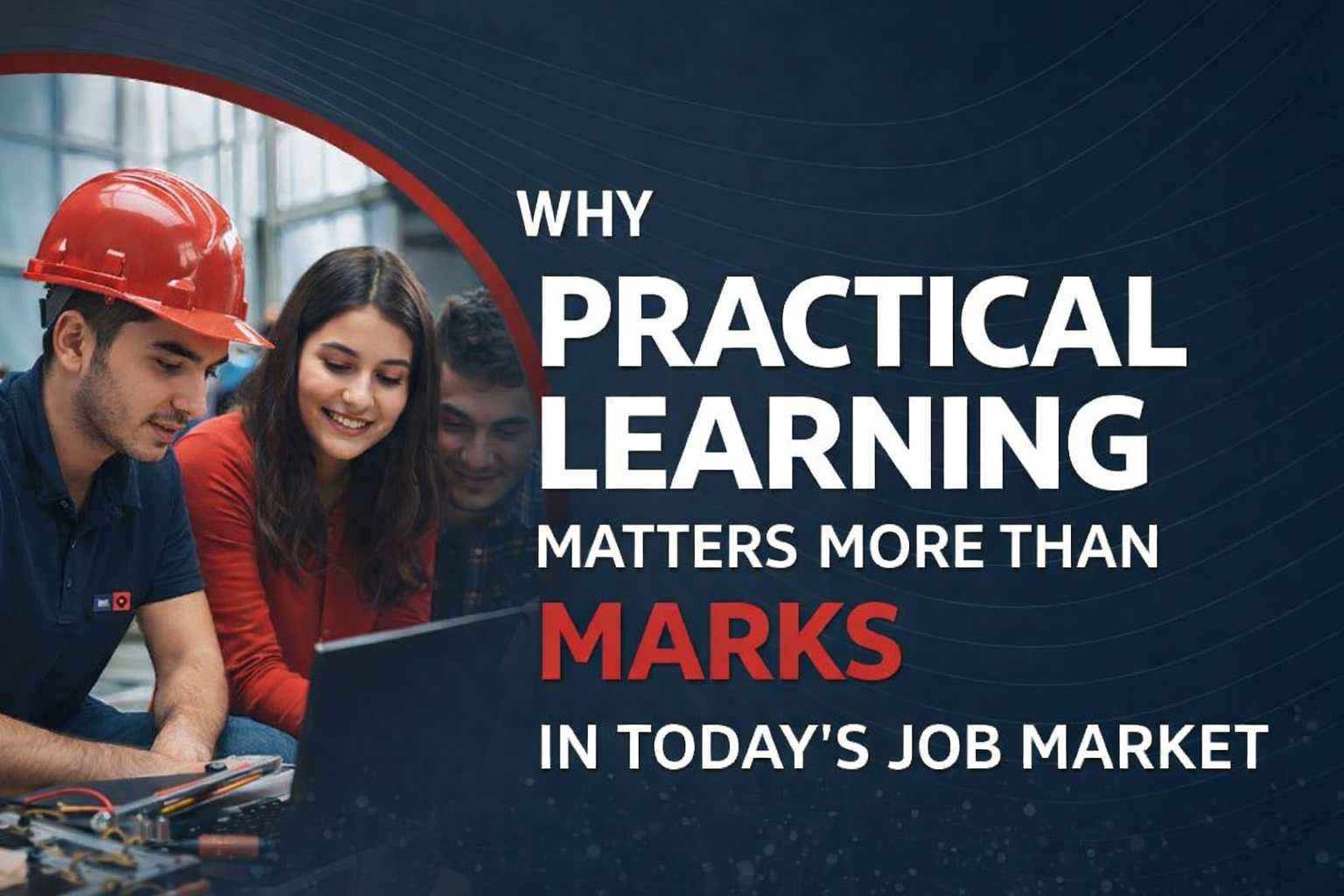
For decades, academic marks were considered the main indicator of a student’s potential. High grades often meant better opportunities, respect, and career security. However, the modern job market has changed significantly. Today, employers are less focused on marks alone and more interested in what students can actually do in real-world situations.
Practical learning has become the key factor that separates job-ready graduates from those who struggle to adapt. This shift is especially important for students planning their careers after +2. In this blog, we will explore practical learning vs marks and understand what truly matters in today’s competitive job market.
1. The Changing Expectations of Employers
Employers today look beyond transcripts. While academic results still matter, they are no longer enough.
Recruiters now prioritize:
-
- Problem-solving ability
- Communication and teamwork
- Technical and digital skills
- Adaptability and learning mindset
Students who have worked on real projects, internships, or practical assignments often perform better in interviews than those with only theoretical knowledge.
2. Why Marks Alone Are No Longer Enough
Marks mainly measure how well a student understands theory and performs in exams. They do not always reflect:
-
- How a student handles real challenges
- How quickly they learn new tools
- How effectively they work with others
- How confident they are in practical situations
Many high-scoring students struggle when they enter the workplace because they are not used to applying knowledge in real scenarios.
3. What Practical Learning Really Means
Practical learning goes beyond textbooks and lectures. It includes:
-
- Project-based learning
- Case studies and real-world scenarios
- Lab work and simulations
- Internships and industry exposure
- Presentations, teamwork, and problem-solving tasks
This approach helps students understand how their academic knowledge is used in real jobs.
4. How Practical Learning Builds Job-Ready Skills
Practical learning directly develops skills that employers value.
Key skills gained include:
-
- Critical thinking and decision-making
- Communication and presentation skills
- Time management and responsibility
- Technical and professional confidence
Students who experience hands-on learning adapt faster when they start working, reducing the gap between education and employment.
5. The Role of Colleges in Practical Education
Colleges play a vital role in preparing students for the real world. Institutions that focus on practical learning:
-
- Integrate industry-relevant curriculum
- Encourage internships and project work
- Promote teamwork through clubs and activities
- Provide exposure to real business and technology challenges
Such learning environments help students graduate with both knowledge and experience.
7. Balancing Marks and Practical Skills
Marks still matter, but they should not be the only focus. The most successful students are those who balance academic performance with skill development.
A strong combination of:
-
- Decent academic results
- Practical experience
- Soft skills
- Continuous learning
creates graduates who are truly job-ready.
Conclusion
The modern job market values ability over memorization. While marks provide a foundation, practical learning prepares students for real challenges, real workplaces, and real careers. For students planning their future after +2, choosing a learning path that emphasizes practical exposure can make a lasting difference.
Education today is not just about scoring high – it is about learning how to apply knowledge, adapt to change, and grow professionally.
Frequently Asked Questions About Practical Learning and Career Readiness
1. Why do employers value practical skills more than academic marks today?
Employers value practical skills because they show a student’s ability to solve real problems, work in teams, communicate effectively, and adapt quickly in a professional environment.
2. Can students start developing practical skills right after completing +2?
Yes, students can start developing practical skills immediately after +2 through project-based learning, internships, workshops, and skill-focused undergraduate programs.
3. Does practical learning reduce the importance of academic marks?
Practical learning does not replace academic marks. Instead, it complements academic performance by helping students apply theoretical knowledge in real-world situations.
4. How does practical learning help students become job-ready?
Practical learning helps students gain hands-on experience, build confidence, improve communication skills, and understand workplace expectations before entering the job market.
5. What should students look for in a college that focuses on practical learning?
Students should look for industry-aligned curriculum, project-based assessments, internship opportunities, experienced faculty, and active student clubs and activities.
6. What should students prioritize: practical learning or marks?
Both are important, but emphasizing practical learning vs marks ensures students not only perform well academically but also develop the skills needed to succeed in today’s competitive job market.


