



Over the past few years, interest in international education in Nepal has grown rapidly. Nepalese students increasingly seek degrees that offer global recognition, practical skills, and better career prospects. At the same time, studying abroad has become more challenging due to rising tuition fees, high living costs, strict visa requirements, and financial uncertainty.
This shift has led to a practical and increasingly popular option: earning a Malaysia degree in Nepal.
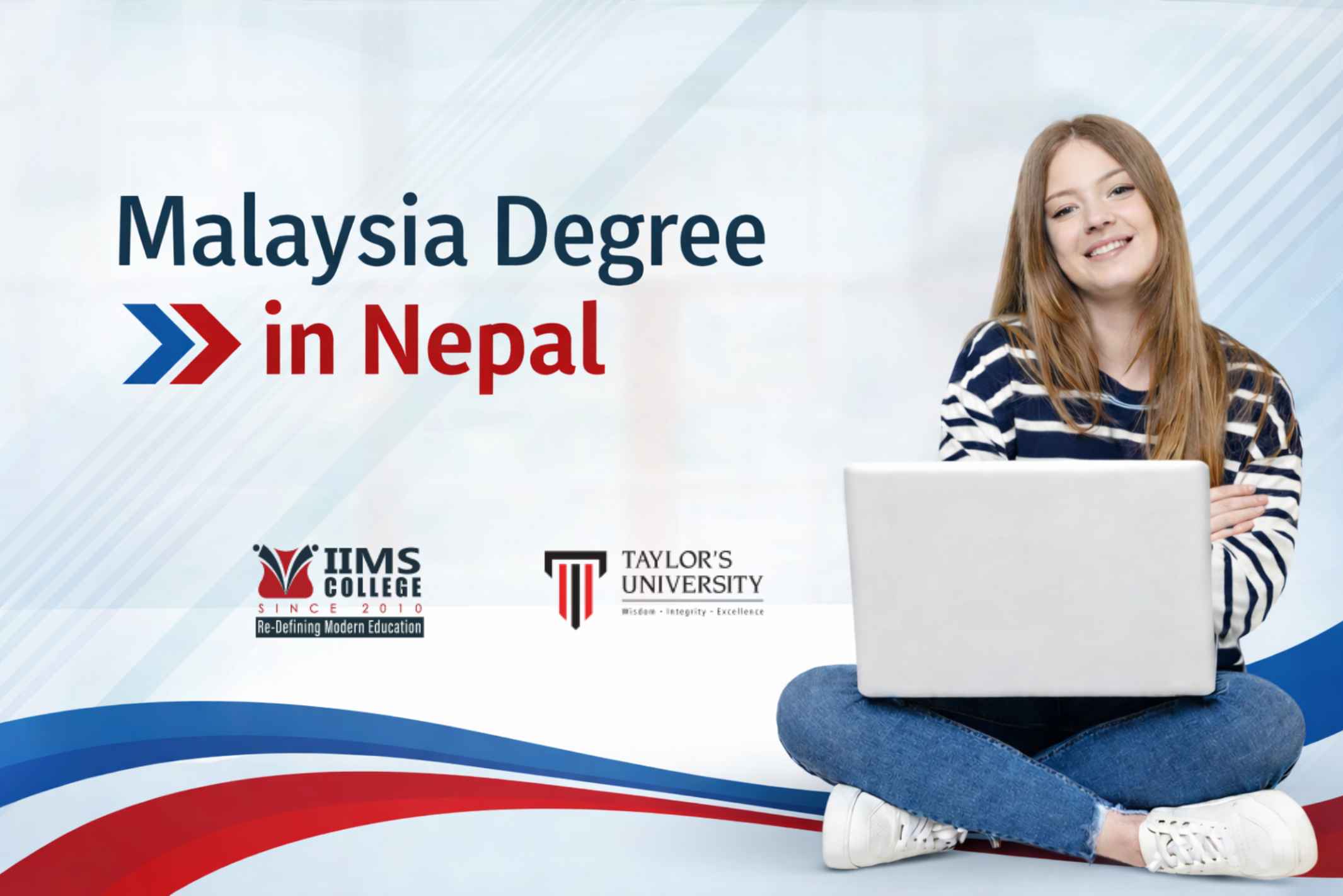
A Malaysia degree delivered in Nepal allows students to study locally while following an international curriculum designed by a Malaysian university. Institutions such as IIMS College, in academic collaboration with Taylor’s University, Malaysia, are making internationally aligned degree programs accessible to Nepalese students without the need to relocate abroad.
What Is a Malaysia Degree in Nepal?
A Malaysia degree in Nepal refers to an academic program delivered by a Nepali institution that follows the curriculum, assessment standards, and academic framework of a Malaysian university. Although students complete their studies in Nepal, the program structure is aligned with international benchmarks set by the academic partner in Malaysia.
Unlike traditional local degrees, these programs emphasize:
- Internationally designed curricula
- Modern teaching and learning methodologies
- Practical, skills-based assessments
- Global academic standards
This model is also different from physically studying in Malaysia, as students remain in Nepal while benefiting from an internationally structured education. For students seeking global exposure without the cost and risks of overseas study, this approach offers a balanced and realistic solution.
Why Nepalese Students Are Choosing International Degrees in Nepal
The growing demand for international degrees offered within Nepal is driven by several key factors. Studying abroad requires a significant financial commitment, including tuition fees, accommodation, daily living expenses, travel costs, and insurance. Visa uncertainty has further increased the risk associated with overseas education.
International degrees in Nepal address these challenges while maintaining academic value. Students gain exposure to global curricula, professional teaching practices, and career-oriented learning without leaving the country. Parents also feel more confident knowing their children can access quality education in a safe and familiar environment.
This trend reflects a shift toward education models that combine affordability, security, and international relevance.
How Malaysian Universities Offer Degrees Outside Malaysia
Malaysian universities are well known for their transnational education models and global academic outlook. Through formal academic partnerships, they collaborate with selected institutions in other countries to deliver their programs internationally.
Under this model:
- The local institution delivers the program in Nepal
- The curriculum and learning outcomes are designed by the partner university
- Assessment methods follow international academic standards
- Teaching frameworks emphasize consistency and quality assurance
This approach allows students to earn an internationally aligned qualification without relocating abroad. Such transnational education models are widely accepted across Asia and other regions.
Taylor’s University and Its Role in International Education
Taylor’s University is one of Malaysia’s leading private universities, recognized for academic excellence, strong industry engagement, and a global outlook. The university is known for delivering career-focused programs in areas such as business, hospitality, management, and technology.
Taylor’s University emphasizes:
- Applied and experiential learning
- Critical thinking and problem-solving skills
- Industry relevance and employability
Through international academic collaborations, Taylor’s University extends its education framework beyond Malaysia while maintaining academic quality. These partnerships allow institutions like IIMS College to adopt structured international teaching and learning approaches that support global career pathways.
How IIMS College Delivers a Malaysia Degree in Nepal
IIMS College, located in Kathmandu, delivers Malaysia-aligned degree programs in Nepal through its academic collaboration with Taylor’s University. The college follows an international academic structure that integrates theoretical knowledge with practical application.
The learning environment at IIMS College emphasizes:
- Project-based learning
- Presentations and group work
- Skill development and professional communication
- Critical thinking and real-world problem solving
Programs Offered at IIMS College
These programs are designed to meet international academic expectations and prepare students for careers in both local and global markets.
Is a Malaysia Degree from Nepal Recognized?
Recognition is a major concern for students and parents. A Malaysia degree delivered in Nepal follows the academic framework and curriculum structure of the partner university, which strengthens its value for employment and further studies.
Graduates benefit from:
- Internationally aligned academic standards
- Skill-focused and industry-relevant learning
- Broader academic and professional perspectives
Employers often value candidates with international academic exposure due to their adaptability, practical skills, and global outlook. For students planning to pursue higher education abroad, an internationally structured degree can also support academic progression, subject to the policies of the destination institution.
Who Should Choose an International Degree in Nepal?
An international degree in Nepal is ideal for students who want more than a conventional local education. It suits students who:
- Aim to work in multinational or international organizations
- Prefer practical, skills-oriented learning
- Plan to pursue further studies abroad in the future
- Seek global relevance without the cost of overseas education
Parents looking for quality education that balances international standards with affordability and safety may also find this model appealing.
Key Things to Check Before Choosing a Malaysia Degree in Nepal
Before enrolling in any internationally affiliated program, students should carefully evaluate several factors. The credibility of the partner university is crucial, as it directly impacts the academic value of the degree. Students should also review the curriculum structure, assessment methods, and learning outcomes.
Other important considerations include:
- Faculty quality and academic support
- Emphasis on practical and industry-based learning
- Career guidance and student support services
- Overall learning environment
Choosing a program with a strong academic partner and structured international framework ensures long-term academic and career value.
Conclusion
A Malaysia degree in Nepal represents a practical and forward-looking education model for Nepalese students. By combining international academic frameworks with local delivery, students gain access to global education standards without the challenges of studying abroad.
Through its academic collaboration with Taylor’s University, IIMS College offers internationally aligned degree programs in Nepal that focus on skills, industry relevance, and global career readiness. For students seeking quality education, international recognition, and long-term value, this approach provides a balanced pathway toward academic and professional success.
FAQs
1. Is a Malaysia degree earned in Nepal considered an international degree?
Yes. A Malaysia degree offered in Nepal follows the curriculum structure, assessment standards, and academic framework of a Malaysian university. Although studied locally, it is internationally aligned and holds global academic value.
2. How is a Malaysia degree in Nepal different from a regular Nepali university degree?
A Malaysia degree in Nepal uses international curricula and teaching methodologies with a strong focus on practical skills and industry relevance. Traditional Nepali degrees often follow local academic structures that may be more theory-oriented.
3. Can students pursue further studies abroad after completing a Malaysia degree in Nepal?
Yes. Graduates can apply for further studies abroad. Acceptance depends on the destination institution, but an internationally aligned degree generally improves academic eligibility.
4. Is studying a Malaysia degree in Nepal more affordable than studying abroad?
Yes. Studying a Malaysia degree in Nepal is significantly more cost-effective. Students save on living expenses, travel costs, and visa-related expenses while accessing international academic standards.
5. What should students verify before enrolling in a Malaysia degree program in Nepal?
Students should verify the credibility of the partner university, curriculum structure, assessment methods, faculty quality, and long-term recognition of the degree. Choosing an institution with a strong international academic partnership is essential.


