





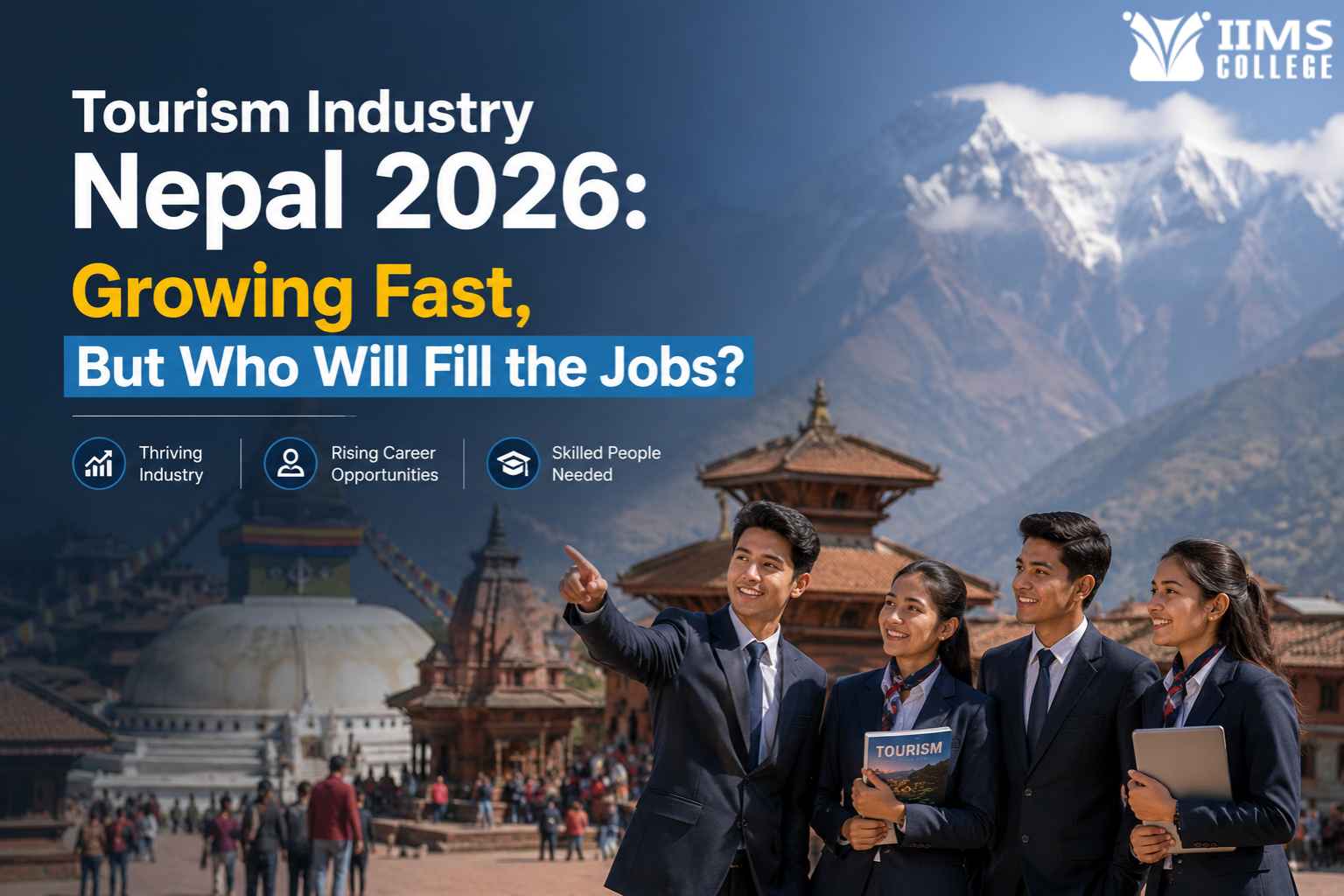
Nepal’s mountains have always drawn the world. But in 2026, the tourism industry in Nepal is doing something extraordinary. It is not just recovering from the COVID years. It is growing faster than ever. New hotels are opening. International brands are arriving. Tourist numbers are breaking records.
Yet behind all this excitement, there is a story most people are missing. Walk into any hotel in Kathmandu or Pokhara today and ask the manager what keeps them up at night. The answer is almost always the same. Finding good people is hard. Keeping them is even harder. Restaurants are short-staffed. Hotels are training new employees every few months because the previous ones left. The industry is filling up with tourists, but the people needed to actually serve them simply are not there yet.
This is not a problem. This is your opportunity. If you are a student in Nepal right now, this blog will show you exactly what is happening, which jobs are available, how much you can earn, and how the right education puts you ahead.
Why the Tourism Industry in Nepal Matters
Most people think of Nepal as a trekking destination. But the importance of tourism industry in Nepal goes much deeper than the mountains.
Here is what tourism actually does for the country:
- Contributes approximately 6.6% to Nepal’s GDP every year
- Supports over 1.19 million jobs across the country
- Nepal’s fourth-largest industry by employment
- Engages around 11.5% of the entire workforce
- Generated over Rs 326 billion for the economy in 2023 alone
(1/8) One out of every eight working people in Nepal is connected to tourism and employment in some way. When tourists visit, they stay in hotels, eat at restaurants, hire guides, and use local transportation. Every rupee they spend creates income for Nepali people.
A growing tourism sector means more jobs, more income, and bigger opportunities for young Nepali students.
The Real Numbers: How Fast Is Tourism Growing in 2026?
Here is verified data from the Nepal Tourism Board:
- January 2026: 92,573 foreign visitors arrived in Nepal, up 15.7% from January 2025 and 14% from pre pandemic January 2019.
- February 2026: 105,441 visitors arrived, a 102.9% recovery from 2019 levels.
- April 2026: Over 107,000 visitors arrived in a single month. Tourism experts predict that Nepal will host 1.3 to 1.5 million foreign visitors in 2026, possibly breaking its all time high.
In February 2026, there were 105,441 visitors, a 102.9% increase over 2019 numbers. In April 2026, more than 107,000 visitors came in one month.
According to tourism experts, Nepal is expected to host 1.3 to 1.5 million foreign visitors in 2026, possibly breaking its previous record. This is not a slow recovery. This is a boom.
The Government of Nepal is pushing this growth further through the Visit Nepal Decade 2025 to 2035, which targets:
- 3.5 million foreign tourists annually by 2032
- Employment for 1 million more people in tourism over the decade
- New digital nomad visas, eco-tourism expansion, and airport upgrades across the country
This plan is a direct signal to students: hospitality jobs in Nepal will multiply fast in the coming years.
The Skill Gap: Nepal’s Biggest Challenge and Your Biggest Opportunity
Nepal’s tourism is growing. But here is the problem the industry faces.
The Hotel Association Nepal (HAN) president, Binayak Shah, publicly confirmed that the hospitality sector nationwide is facing a skilled-worker crisis. Hotels cannot find or keep trained staff.
The numbers tell the story:
- Only 27 to 30% of hotel staff stay long-term
- Most trained workers leave within months, often for better-paying jobs abroad
- Hotels were running at a fraction of capacity due to a shortage of chefs, housekeepers, and managers
- Training one employee costs hotels at least Rs 1,00,000, and many leave shortly after
This is one of the key challenges in the tourism industry in Nepal. The country is growing rapidly, but trained people are not available to keep pace with that growth.
For a student, this is the best possible career situation. When demand is high and supply is low, skilled people are highly valued and well paid.
Where Can You Work? Career Opportunities in Hospitality
The scope of hospitality in Nepal is wider than most students realize. It is not just about working at a hotel reception.
Here is where hospitality graduates actually work:
Hotels and Resorts
- Front Office Manager, Guest Relations Officer, General Manager
- Housekeeping Manager, Revenue Manager.
Food and Beverage
- Restaurant Manager, Head Chef, Banquet Manager
- Event Coordinator, Barista, Bartender
Travel and Tourism
- Tour Operator, Travel Agent, Trekking and Adventure Guide
- Destination Management Specialist.
Airlines and Events
- Cabin Crew and Airport Hospitality Staff
- Event Planner, Conference and MICE Coordinator
International Opportunities
- Hotels in Dubai, Singapore, the UK, and Australia actively recruit trained Nepali professionals
- International experience significantly boosts your salary when you return to Nepal.
International brands like IHG Hotels and Resorts (Crowne Plaza Lumbini, Holiday Inn Express), Hyatt Regency Kathmandu, and multiple luxury properties are expanding operations across Nepal right now. These hotels need professionals who understand global service standards.
Over 85% of hospitality management graduates find employment within six months of graduation. That is one of the strongest placement rates of any degree program in Nepal.
Hotel Management Salary in Nepal: Real Numbers
Students always ask: ” What will I actually earn? Here is honest data.
The hotel management salary in Nepal depends on your experience and the type of hotel you work in.
| Experience Level | Monthly Salary (NPR) |
| Entry level (0 to 2 years) | NPR 15,000 to NPR 40,000 |
| Mid-level (2 to 5 years) | NPR 30,000 to NPR 70,000 |
| Senior level (5 or more years) | NPR 70,000 to NPR 1,50,000+ |
| International roles (abroad) | USD 600 to USD 3,000+ per month |
A few things to know about these numbers:
- Graduates from internationally affiliated programs start at the higher end of entry-level ranges
- Professionals at international chain hotels earn more than those at local properties
- Senior roles like General Manager can earn NPR 2,00,000 or more at premium hotels
- Working abroad, even for 2 to 3 years, and returning to Nepal significantly increases your local earning power
Hotel Management Course in Nepal: What You Need to Know
A hotel management course in Nepal teaches you everything needed to run hotels, restaurants, resorts, and tourism businesses.
What you learn:
- Front office operations and guest relations
- Food and beverage service and management
- Housekeeping, hotel accounting, and marketing
- Leadership, communication, and customer service
Duration: Most bachelor’s programs run for 4 years across 8 semesters, including a 6 month paid internship at a real hotel.
Hotel Management Course Fees in Nepal:
| Programme Type | Total Fees (Approx.) |
| TU or PU-affiliated BHM | NPR 6,00,000 to NPR 8,00,000 |
| Internationally affiliated BIHM | NPR 10,00,000 to NPR 12,00,000 |
| Short-term diploma (6 months to 1 year) | NPR 50,000 to NPR 1,50,000 |
The hotel management course fees in Nepal at internationally affiliated colleges are higher. But the return is also much better. Graduates from international programs are preferred by luxury hotels and international chains, both in Nepal and abroad.
BIHM at IIMS College: Built for Nepal’s Tourism Future
For students seeking to study hospitality management at the highest level in Nepal, the BIHM (Bachelor of International Hospitality Management) at IIMS College is the strongest option.
IIMS College offers the BIHM program in direct partnership with Taylor’s University, Malaysia, ranked as the number one private university in Southeast Asia for four consecutive years (QS World University Rankings).
What makes BIHM at IIMS different:
- International curriculum that meets global hospitality standards, not just local ones
- Practical, project based learning with real hospitality projects and hotel simulations
- Guest lectures from international hotel professionals, not just classroom theory
- Strong English and communication training is built throughout the program
- Credit transfer pathways to continue your degree in the UK, Australia, and other countries
- Growth and Development Service (GDS) for career support and internship placements
- Scholarships available for 10% of enrolled students each year
The total fee for the full four-year BIHM degree at IIMS is approximately NPR 10 Lakhs.
This is the kind of hospitality training in Nepal that directly prepares graduates for the international hotel brands now operating in Nepal, not just local properties.
Conclusion
Nepal’s tourism industry is transforming fast. International hotel brands are arriving. Tourist numbers are breaking records. The government is investing heavily through the Visit Nepal Decade 2025 to 2035.
But the industry has one clear gap: not enough skilled, trained hospitality professionals. That gap is your opportunity.
If you choose to study hospitality management now, with proper hospitality training, real practical experience, and an internationally recognized degree, you are entering the industry at exactly the right time. The hotels are ready. The tourists are coming. The career opportunity in tourism is real and growing every year.
Your next step is simple. Talk to IIMS College today and find out how the BIHM program can build the career you want.
Frequently Asked Questions
1. What is the importance of the hospitality industry in Nepal?
The importance of the hospitality industry in Nepal is enormous. It contributes 6.6% to GDP, supports over 1.19 million jobs, and is the country’s fourth largest industry by employment. As the Visit Nepal Decade 2025 to 2035 brings millions more tourists, the hospitality industry will become increasingly central to Nepal’s economy.
2. What is the salary for hotel management in Nepal for freshers?
Fresh graduates typically earn between NPR 15,000 and NPR 40,000 per month. Graduates from internationally affiliated programs and those with strong internship experience start at the higher end, especially at premium and international chain hotels.
3. What are the hotel management course fees in Nepal?
TU and PU-affiliated BHM programs cost between NPR 6,00,000 and NPR 8,00,000 for four years. The BIHM at IIMS College costs approximately NPR 10 lakhs above for the full degree, which includes Taylor’s University affiliation and global recognition.
4. What is the scope of hospitality in Nepal in 2026?
The scope of hospitality in Nepal is very strong. With arrivals growing 15% year-on-year and the Visit Nepal Decade targeting 3.5 million annual tourists by 2032, demand for trained professionals will grow for at least the next decade.
5. What is BIHM, and how is it different from BHM?
BIHM stands for Bachelor of International Hospitality Management. Unlike a standard BHM, the BIHM at IIMS College follows an internationally recognized curriculum from Taylor’s University, Malaysia. Graduates can transfer credits to the UK or Australia and are preferred candidates at international hotel chains in Nepal.


